


I remember my first time with mindfulness meditation. It felt like a huge weight was lifted. Studies show that regular mindfulness can really cut down stress. Just a few minutes each day can change how we feel and see the world.
Let’s start this journey together. We’ll find calm by being present. Mindfulness practice helps us know ourselves better and feel more grateful. It’s about being kind to yourself and curious about your feelings.
Key Takeaways
- Discover the benefits of mindfulness meditation for stress reduction.
- Learn how to cultivate self-awareness through mindfulness practice.
- Understand the role of gratitude in achieving inner peace.
- Explore simple mindfulness exercises for beginners.
- Find out how regular mindfulness practice can improve mental well-being.
Understanding Inner Peace Meditation
Seeking inner peace is a common goal for many. Meditation is a key tool in this quest. Let’s dive into what inner peace meditation is and how it can improve our lives.
What is Inner Peace Meditation?
Inner peace meditation aims to bring calm and clarity to our lives. It uses relaxation techniques to quiet the mind and relax the body. This practice helps us face life’s challenges with peace and balance.
This meditation helps you connect with your inner self. It teaches you to ignore outside distractions and focus on your inner world. It’s about finding a peaceful place within, away from daily stress.
Benefits of Practicing Inner Peace Meditation
Inner peace meditation offers many benefits for our mental and physical health. One major advantage is stress relief. Regular practice can lower stress, leading to a healthier life.
It also improves emotional control, focus, and overall well-being. Adding inner peace meditation to your daily routine can bring these benefits. You’ll enjoy a more peaceful and centered life.
Starting this meditation journey is unique for each person. Be kind and patient with yourself as you explore your inner world.
The Science Behind Meditation
Exploring the science of meditation reveals its power to boost mental clarity and aid in self-discovery. It shows that meditation’s benefits reach deep into our brain’s workings. This goes beyond just spiritual practices.
How Meditation Affects the Brain
Meditation changes the brain in many ways. It increases gray matter in parts linked to focus, emotions, and memory. This change can improve thinking and emotional health.
Stress Reduction Through Mindfulness
Mindfulness meditation helps reduce stress by focusing on the present. It involves paying attention to breath or a mantra. This calms the mind and lowers stress hormones, helping us feel more balanced.
As we learn more about meditation’s effects, it’s clear it’s a game-changer. Adding it to our daily routine can greatly benefit our mental clarity and health.
Getting Started with Meditation
Starting your meditation journey can be a game-changer. It’s a way to find mindfulness and peace. You can make meditation fit your life easily. Just follow a few simple steps to start feeling its benefits.
Setting Up Your Meditation Space
Having the right space is key for good meditation. You need a quiet, comfy spot to sit and meditate without interruptions. Here are some tips to create your meditation area:
- Find a quiet spot in your home where you won’t get distracted.
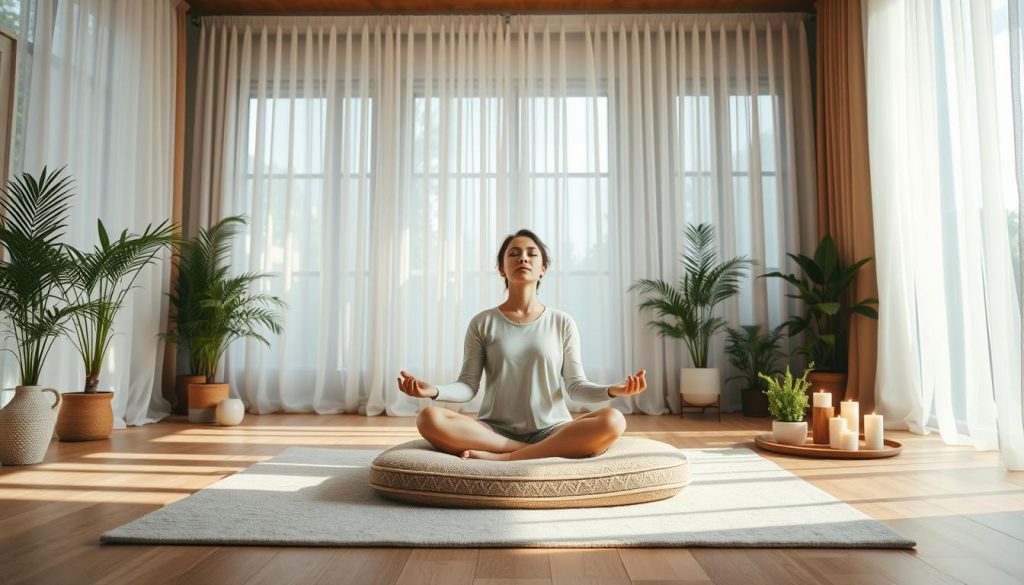
- Use a cushion or chair that keeps your back straight and supports your posture.
- Keep the area tidy to help you feel calm.
- Adding candles or plants can make the space even more peaceful.

Choosing the Right Time and Duration
Choosing the right time and length for meditation is important. Here are some tips to help you start:
Best Time to Meditate:
- Morning meditation can make your day better and clear your mind.
- Meditating before bed can help you relax and sleep better.
Duration:
- Start with short sessions of 5-10 minutes and grow as you get more comfortable.
- Being regular is more important than how long you meditate.
Adding mindfulness meditation to your daily life can bring you peace and better well-being. Just remember to be consistent and patient with your practice.
Different Techniques for Inner Peace
There are many meditation practices that can help you find inner peace. Each one has its own benefits. You can pick the ones that fit your journey to relaxation and peace.
Guided Meditation for Beginners
Guided meditation is great for beginners. It involves following a guide who helps you relax and focus. This method is helpful because it gives you a clear path to follow.
Benefits of Guided Meditation:
- Reduces anxiety and stress
- Improves focus and concentration
- Enhances self-awareness
Guided meditation helps you find calm and understand yourself better.
Breath Awareness Meditation
Breath awareness meditation is also powerful. It focuses on your breath, letting go of thoughts. This practice calms your mind and brings you to the present.
Key aspects of Breath Awareness Meditation include:
- Observing the sensation of the breath
- Noticing the pattern of inhales and exhales
- Gently bringing your focus back when the mind wanders
This technique builds mindfulness. It’s easy to do anywhere, making it perfect for daily life.
As you keep meditating, you might want to mix different techniques. Or try new ones. Remember to be patient and kind to yourself as you explore.
Overcoming Common Meditation Challenges
Starting your meditation journey can have its ups and downs. It’s a practice that needs patience, dedication, and understanding. It’s not about reaching a certain state. It’s about being aware and accepting of the moment.
Dealing with Distractions
One big challenge is dealing with distractions. These can be loud noises, a wandering mind, or physical discomfort. To handle this, acknowledge the distraction and refocus on your breath or meditation object.
- Notice the distraction: Be aware of when your mind starts to wander or when you’re distracted by your surroundings.
- Gently refocus: Without judgment, bring your attention back to your meditation practice.
- Be patient: Understand that it’s a process to develop the ability to stay focused.
By doing this, you’ll get better at focusing. This will lead to more mental clarity and calmness.
Managing Expectations
Managing what you expect from meditation is another challenge. Some think meditation will instantly reduce stress or get rid of negative thoughts. But, meditation is a gradual process. It’s important to have realistic expectations and an open mind.
To manage your expectations well, consider these tips:
- See meditation as a journey, not a goal.
- Practice regularly, even if it’s just a few minutes a day.
- Look at your progress over time, not expecting quick results.
This way, you’ll see the subtle yet deep benefits of meditation. You’ll feel more stress relief and inner peace.
Incorporating Meditation into Daily Life
Adding meditation to our daily routine opens up a world of self-discovery and mindfulness. As we make it a regular part of our lives, we start to see big changes in how we see and feel things.
As you keep going on your meditation path, it’s key to find a routine that fits you. It’s not just about finding a quiet spot. It’s about making a ritual that you enjoy.
Creating a Consistent Routine
To make a steady meditation routine, pick a specific time and place each day for it. It could be early morning, lunchtime, or before bed. Choose what fits your schedule best.
Consistency is key in meditation. Regular practice helps you get into a meditative state and enjoy mindfulness benefits.
Mindfulness Practices Beyond Meditation
Mindfulness isn’t just for meditation; it’s a way to live in the moment. You can be mindful while walking, eating, or talking. It brings awareness and presence to every moment.
Adding mindfulness to your daily life boosts self-awareness and deep connection to your inner self. It leads to living more intentionally and feeling more fulfilled.
Exploring mindfulness beyond meditation means focusing on being present and accepting in every moment. This way, meditation and mindfulness become key parts of your self-discovery journey.
The Role of Technology in Meditation
In today’s world, technology is changing how we meditate. Digital tools and platforms have made meditation easier and more varied.
Technology has improved my meditation, letting me try new things and meet others who meditate. You can use these tools to make your mindfulness practice better and find more peace.
Meditation Apps and Online Resources
Meditation apps like Headspace and Calm have changed how we meditate. They offer guided sessions for all levels. These apps are great for anyone starting or already meditating.
- Guided meditation sessions for stress reduction
- Personalized meditation plans based on your goals
- Tracking features to monitor your progress
Online, you can find blogs and websites about mindfulness. They share tips and the science behind meditation.
Virtual Meditation Communities
Virtual meditation groups are a big part of online meditation. They let people connect, share, and meditate together.
| Platform | Features | Benefits |
|---|---|---|
| Online Forums | Discussion boards, Q&A sessions | Support, guidance, and connection |
| Social Media Groups | Group discussions, event announcements | Community building, updates |
| Virtual Meditation Sessions | Live guided meditations | Collective energy, shared experience |
By using technology, you can make your meditation better. It helps you find peace of mind.
Exploring Advanced Meditation Techniques
Advanced meditation techniques can deepen your journey to inner peace and self-awareness. As you progress, you might want to try more complex practices. These can help you understand yourself and the world better.
Loving-Kindness Meditation
Loving-kindness meditation, or Metta meditation, focuses on love, compassion, and kindness. You repeat phrases to feel warmth and understanding. This practice makes you more compassionate and empathetic, leading to inner peace and better relationships.
To start, find a quiet spot to sit comfortably. Begin by being kind to yourself, then to others. This practice connects you with others and brings peace.
Transcendental Meditation
Transcendental meditation uses a mantra to quiet the mind and reach a deeper state. It reduces stress and boosts mental clarity and creativity. This practice brings calm and peace, even in busy times.
For transcendental meditation, get a certified teacher for a mantra and technique. Regular practice unlocks its full benefits, leading to self-discovery and peace.
Exploring advanced meditation techniques is a personal journey. Be patient and let these practices guide you. Cultivating kindness, compassion, and awareness helps you grow and find inner peace.
Sharing Your Meditation Journey
As you keep going on your meditation path, think about sharing your experiences with others. Connecting with people who meditate can make your relaxation techniques better and improve your mental clarity. Joining a community of meditators can give you a sense of belonging and support.
Building Connections Through Meditation
Sharing your meditation journey can lead to new relationships and a deeper understanding. You don’t have to go through this alone. Group meditation sessions let you feel the calm and energy that comes from shared mindfulness.
Benefits of Collective Meditation
Group meditation sessions are a great way to connect with others while improving your own practice. These shared moments can bring you greater mental clarity and inner peace. Exploring collective meditation can be a powerful way to relax and grow personally.
FAQ
What is inner peace meditation, and how can it benefit me?
Inner peace meditation is a mindfulness practice. It helps you become more aware of yourself and feel grateful. It also brings a sense of calm to your mind.
FAQ
What is inner peace meditation, and how can it benefit me?
Inner peace meditation is a mindfulness practice. It helps you become more aware of yourself and feel grateful. It also brings a sense of calm to your mind.
How do I get started with meditation, and what kind of space do I need?
FAQ
What is inner peace meditation, and how can it benefit me?
Inner peace meditation is a mindfulness practice. It helps you become more aware of yourself and feel grateful. It also brings a sense of calm to your mind.
FAQ
What is inner peace meditation, and how can it benefit me?
Inner peace meditation is a mindfulness practice. It helps you become more aware of yourself and feel grateful. It also brings a sense of calm to your mind.
How can meditation help with stress relief and mental clarity?
FAQ
What is inner peace meditation, and how can it benefit me?
Inner peace meditation is a mindfulness practice. It helps you become more aware of yourself and feel grateful. It also brings a sense of calm to your mind.
What are some common challenges that people face when practicing meditation, and how can I overcome them?
FAQ
What is inner peace meditation, and how can it benefit me?
Inner peace meditation is a mindfulness practice. It helps you become more aware of yourself and feel grateful. It also brings a sense of calm to your mind.
How can I incorporate meditation into my daily life, and what are some mindfulness practices I can try beyond meditation?
FAQ
What is inner peace meditation, and how can it benefit me?
Inner peace meditation is a mindfulness practice. It helps you become more aware of yourself and feel grateful. It also brings a sense of calm to your mind.
What role can technology play in my meditation practice, and what are some resources I can use?
FAQ
What is inner peace meditation, and how can it benefit me?
Inner peace meditation is a mindfulness practice. It helps you become more aware of yourself and feel grateful. It also brings a sense of calm to your mind.
How can I share my meditation journey with others, and what are the benefits of doing so?
FAQ
What is inner peace meditation, and how can it benefit me?
Inner peace meditation is a mindfulness practice. It helps you become more aware of yourself and feel grateful. It also brings a sense of calm to your mind.
What are some advanced meditation techniques I can try, and how can they benefit me?
FAQ
What is inner peace meditation, and how can it benefit me?
Inner peace meditation is a mindfulness practice. It helps you become more aware of yourself and feel grateful. It also brings a sense of calm to your mind.
How can I maintain a consistent meditation practice, and what are some tips for staying motivated?
FAQ
What is inner peace meditation, and how can it benefit me?
Inner peace meditation is a mindfulness practice. It helps you become more aware of yourself and feel grateful. It also brings a sense of calm to your mind.
