


Reiki is often described as a form of universal life energy. For some, it is a spiritual practice. For others, it is a way to relax, reconnect with the body and create a moment of stillness in an increasingly restless world.
Between Spiritual Tradition and Modern Science
There are moments when another person does not need advice, solutions or explanations. Sometimes what is needed most is simply presence.
A quiet room. A body that is allowed to rest. Hands gently placed on or held above the body. No pressure to perform, understand or achieve anything.
This simplicity lies at the heart of Reiki.
Today, Reiki is practiced throughout the world in private practices, meditation centres, wellness environments and, in some places, alongside conventional healthcare. For some people, it is primarily a spiritual practice. Others experience it as a form of deep relaxation. Practitioners often describe Reiki as working with universal life energy, while researchers usually place it within the broader category of so-called biofield therapies.
Yet Reiki also sits at an interesting crossroads.
Millions of people report experiences of warmth, calmness, emotional release or profound relaxation during Reiki sessions. At the same time, modern science has not demonstrated the existence of the universal energy field that traditional Reiki teachings describe. Research into Reiki has produced intriguing results, particularly regarding anxiety, stress and quality of life, but it has not provided definitive evidence for the energetic explanation traditionally associated with the practice.
That does not necessarily make Reiki meaningless.
It makes the subject more interesting.
Perhaps the most useful question is therefore not whether we must choose between spirituality and science, but what we actually know about Reiki, what remains uncertain and why a practice developed in Japan more than a century ago continues to fascinate people today.
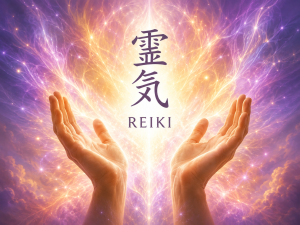
What Is Reiki?
Reiki is a Japanese practice generally associated with Mikao Usui, who developed what became known as Usui Reiki Ryōhō in the early twentieth century.
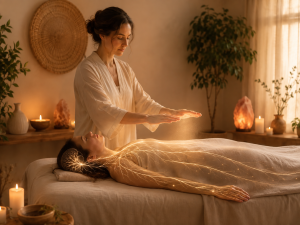
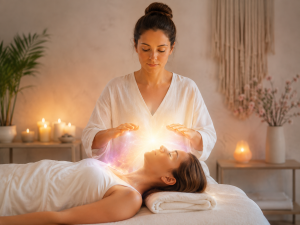
During a typical session, the recipient remains fully clothed and usually lies comfortably on a treatment table or sits in a chair. The practitioner places their hands lightly on different areas of the body or holds them a short distance above it.
Unlike massage, Reiki does not involve manipulating muscles or joints.
Within traditional Reiki teaching, the practitioner is not considered the source of healing energy. Instead, they act as a channel through which Reiki flows. The recipient does not consciously direct that process, and practitioners generally believe the energy moves where it is needed.
The word itself is composed of Japanese characters whose meanings cannot be translated perfectly into English. Ki refers broadly to vital energy or vital movement, a concept that has parallels with Chinese qi and ideas of life force found in numerous Asian philosophical traditions. Rei carries associations with something spiritual, subtle, sacred or universal.
For this reason, Reiki is frequently translated as “universal life energy” or “spiritually guided life-force energy.”
Such translations are useful, although they simplify concepts that developed within a Japanese linguistic and cultural environment very different from modern Western ideas of “energy.”
This distinction becomes important when people attempt to explain Reiki scientifically.
The word energy means something very specific in physics. The spiritual concept of ki does not automatically correspond to electromagnetic energy, electrical energy or any other measurable physical force simply because the same English word is used.
Confusing these meanings has created many unnecessary arguments between supporters and critics of Reiki.
One can acknowledge the traditional concept without pretending that physics has already confirmed it.
The Origins of Reiki
The modern history of Reiki begins with Mikao Usui, born in Japan in 1865 and dying in 1926.
Unfortunately, separating historical information about Usui from later stories is not always easy.
Much of Reiki’s history was passed orally from teacher to student, particularly as the system travelled from Japan to Hawaii and eventually into the Western world. Some biographies written decades later contain claims for which historical evidence is weak or absent.
More careful contemporary Reiki historians therefore distinguish between documented history and tradition.
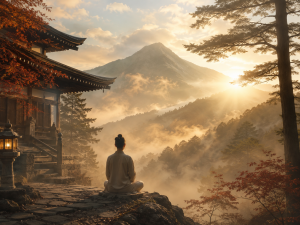
One of the most important historical sources is the memorial stone erected after Usui’s death. According to the inscription, Usui undertook an intensive period of fasting and spiritual practice on Mount Kurama, north of Kyoto. During this retreat he experienced a profound spiritual awakening associated with what later became his healing method. Traditional accounts place this experience around 1922.
The story is sometimes presented dramatically: after twenty-one days of meditation and fasting, Usui supposedly experienced a sudden illumination in which Reiki was revealed to him.
Whether one interprets this literally, symbolically or psychologically depends largely upon one’s worldview.
What is historically clearer is that Usui subsequently established a system of teaching and practice in Tokyo. His work was not concerned solely with placing hands on sick people. Early Reiki also contained elements of meditation, personal discipline, ethical development and spiritual cultivation. Contemporary organisations studying the Japanese tradition emphasise that Usui Reiki Ryōhō was understood as a broader method for cultivating body, mind and character.
This aspect is frequently lost in modern Western Reiki.
Reiki was not originally simply a technique performed for an hour while someone lay on a treatment table.
It was a way of practice.
The Five Reiki Principles
At the centre of Usui’s teaching were ethical principles commonly called the Gokai, or Five Precepts.
They begin with an idea that is remarkably simple:
Just for today.
Rather than demanding permanent perfection, the practitioner is invited to return to awareness today.
Traditional versions vary slightly in translation, but the principles generally encourage a person not to become consumed by anger or worry, to practice gratitude, to work honestly and diligently, and to show kindness toward others.
Their origins reflect themes found throughout Japanese spiritual and ethical traditions, including Buddhist, Shinto and Confucian influences. Reiki historians caution against presenting them as a completely isolated philosophy invented by Usui. Instead, they can be understood as a concise expression of ideas circulating within the spiritual culture of his time.
This changes the way Reiki can be understood.
Healing, from this perspective, is not merely something that happens when someone’s hands are placed above your body.
How you live matters, how you respond to fear matters and how you treat other people matters.
Your relationship with anger, gratitude and responsibility becomes part of the practice.
In this sense, Reiki originally had something in common with many contemplative traditions: transformation was expected to involve the person as a whole.
From Mikao Usui to the Western World
After Usui’s death in 1926, his teachings continued through his students.
One of the most influential was Chujiro Hayashi, a Japanese naval officer who became a Reiki teacher and developed a more structured approach to treatment. Hayashi’s work played an important role in the transition between Usui’s Japanese practice and the system that would eventually become familiar in the West.
The decisive figure in that international development was Hawayo Takata.
Takata was born in Hawaii to Japanese parents. During the 1930s she encountered Hayashi’s work in Japan, trained in Reiki and later became a Reiki Master. Through her teaching in Hawaii and North America, Reiki gradually spread throughout the Western world.
Nearly every major Western Reiki lineage has been influenced directly or indirectly by the line usually described as:
Usui – Hayashi – Takata.
As Reiki travelled, however, it changed.
Practices were reorganised, stories were adapted and some spiritual ideas were presented in language that Western students could more easily understand. Over subsequent decades, many new Reiki schools appeared, incorporating additional symbols, philosophies and methods.
This explains why Reiki practitioners today do not necessarily practice exactly the same system.
The familiar structure of Reiki I, Reiki II and Reiki Master/Teacher is largely the result of this later development, even though it has roots in earlier Japanese stages of training.
Understanding this evolution matters because spiritual traditions often acquire an aura of timelessness once they become popular.
Modern Reiki is not an untouched ancient system preserved for thousands of years.
It is a living tradition with identifiable twentieth-century Japanese origins that has continued evolving as it moved between cultures.
That history does not diminish it.
In some ways, it makes Reiki considerably more interesting.

What Happens During a Reiki Session?
A Reiki treatment is outwardly uneventful.
There may be soft music, although it is not essential. The recipient usually closes their eyes while the practitioner moves through a sequence of hand positions around the head, shoulders, torso and sometimes the legs and feet.
Touch, where used, tends to be extremely gentle.
Some practitioners avoid physical contact entirely and hold their hands slightly above the body.
People report very different sensations.
Some notice warmth beneath the practitioner’s hands. Others describe tingling, heaviness, lightness, emotional release or a sense that their perception of time changes. Many simply become deeply relaxed.
Others feel almost nothing.
This is worth saying because spiritual practices sometimes develop expectations that everyone must experience something dramatic.
They do not.
A person who sees colours, feels heat or experiences a powerful emotional release has not necessarily received “more Reiki” than someone who simply lies quietly for forty minutes.
Subjective experiences vary enormously.
How Does Reiki Supposedly Work?
Traditional Reiki explains the practice through ki, the life force believed to move through living beings.
When this flow is harmonious, physical, emotional and spiritual wellbeing are believed to be supported. When it becomes disrupted or imbalanced, difficulty may arise.
A Reiki practitioner is traditionally understood to facilitate rather than personally create the flow of Reiki.
This concept places Reiki among a much larger family of traditions that describe life through subtle energy.
Indian traditions speak of prana.
Chinese philosophy and medicine speak of qi.
Japanese culture uses the term ki.
Yoga traditions describe nadis and chakras, while Chinese traditions developed systems of meridians.
It is tempting to combine all of these systems and assume that they describe exactly the same phenomenon.
Historically, they do not.
They emerged within different philosophical systems and should not simply be collapsed into one universal anatomical map.
Nevertheless, they share an important intuition: a human being is more than an isolated collection of mechanical parts.
Modern science would agree with that statement, although for completely different reasons.
Our nervous system, endocrine system, immune system, emotional state, social relationships, expectations, environment and perception constantly influence one another.
Where traditional language speaks of balance, contemporary biology speaks of regulation.
Those concepts are not identical, but neither are they necessarily enemies.
What Does Reiki Research Actually Show?
Scientific research into Reiki has produced mixed but increasingly interesting results.
Earlier systematic reviews were cautious. A 2008 review of randomized clinical trials concluded that the available evidence was insufficient because studies were generally small, methodological quality was poor and independent replication was lacking. Another systematic review published shortly afterwards reached a similar conclusion: although several studies reported positive outcomes, the overall quality of the research prevented firm conclusions.
More recent research has produced somewhat more encouraging findings.
Beyond Placebo
A 2022 systematic review focusing specifically on mental health symptoms compared Reiki with placebo or sham interventions. Fourteen studies were included. The authors found evidence suggesting that Reiki might have effects beyond placebo for some symptoms of stress, depression and anxiety, while simultaneously warning that the number of studies remained small and that concerns about bias persisted.
A 2024 meta-analysis involving 824 participants reported a statistically significant reduction in anxiety associated with Reiki interventions. The authors nevertheless found variation between populations and treatment schedules and noted that outcomes were less consistent in some groups, including certain cancer and preoperative populations.
Research published in 2025 examined Reiki and quality of life. That meta-analysis included randomized controlled trials involving 661 participants and reported a modest statistically significant improvement in quality of life.
Individual controlled studies have also produced positive findings. For example, a randomized sham-controlled trial involving patients undergoing gastrointestinal endoscopy found lower anxiety and stress and greater comfort in the Reiki group compared with sham Reiki and standard control groups.
A randomized, placebo-controlled study published in 2026 has continued investigating Reiki in mechanically ventilated patients, illustrating that clinical research into the practice remains active rather than belonging only to older complementary-medicine literature.
Still, these results do not justify saying, “Science has proven Reiki healing.”
The overall literature remains heterogeneous. Studies use different forms of Reiki, different session lengths, different practitioners and very different patient groups. Sample sizes are frequently small, blinding is difficult and subjective outcomes such as stress, wellbeing or pain are particularly sensitive to context and expectation.
That does not make these outcomes irrelevant.
It simply changes what can responsibly be concluded from them.
Perhaps We Are Asking the Wrong Question
The debate around Reiki often becomes unnecessarily primitive.
One side says:
“Reiki works because universal energy flows through the practitioner’s hands.”
The other responds:
“There is no measurable Reiki energy, therefore nothing happens.”
Human biology is considerably more complicated than either statement suggests.
Imagine lying comfortably for an hour in a quiet environment while another human being gives you complete, non-demanding attention.
No telephone or obligations or performance
Nor conversation to manage.
Your breathing may gradually slow. Muscular tension may decrease. Attention moves away from external problems and toward bodily sensations.
If gentle touch is involved, another biological dimension appears.
A large 2024 systematic review and meta-analysis covering 137 studies and nearly 13,000 participants found that touch interventions can produce measurable benefits in adults, particularly regarding pain, anxiety and depressive symptoms.
That research was not specifically about Reiki. Yet it demonstrates something important.
Touch itself matters, also safety and attention matter.
The Nervous System May Be Part of the Story
Another possible explanation involves autonomic regulation.
The human nervous system constantly adjusts between mobilisation and restoration.
When danger is perceived, sympathetic activation helps prepare the body for action. Heart rate can increase, muscles tense and attention narrows.
When safety returns, parasympathetic processes help support rest, digestion and recovery.
A Reiki session creates many conditions associated with reduced stimulation: stillness, closed eyes, little movement, quiet breathing and a predictable environment.
It would therefore not be surprising if at least part of the experience involved nervous-system regulation.
Research into slow breathing, although again not Reiki-specific, strongly demonstrates that respiration can affect autonomic activity and heart-rate variability. A large systematic review and meta-analysis found increases in vagally mediated heart-rate variability during and after slow breathing practices, providing physiological evidence that seemingly simple states of quiet breathing can alter autonomic regulation.
This offers an important middle ground.
Someone may enter a Reiki session feeling overstimulated and leave feeling profoundly calmer.
Science does not have to detect mysterious energy flowing from the practitioner’s hands in order for that change to be real.
The experience itself can influence physiology.
Reiki as a Spiritual Practice
Reducing Reiki entirely to relaxation would nevertheless miss something important about why many people practice it.
For practitioners, Reiki is often not primarily an attempt to cure disease.
It can become a practice of presence.
The practitioner learns to become quiet rather than constantly intervening.
Attention replaces control.
Listening replaces fixing.
That principle has significance far beyond a treatment room.
Many of us approach ourselves exactly as we approach problems in the outside world: we do constantly correct, optimize, improve or repair something.
Reiki introduces a different possibility.
Perhaps not every moment requires intervention.
Sometimes awareness itself changes our relationship with what is happening.
This connects Reiki with a larger contemplative principle found in many spiritual traditions.
Healing does not necessarily mean returning the body to a previous state.
Sometimes healing means changing the way we inhabit the state we are already in.
Reiki Should Complement Medicine, Not Replace It
A responsible spiritual community must be clear about this point.
We should not use Reiki as a replacement for necessary medical diagnosis or treatment.
A Reiki practitioner should not tell someone to discontinue medication, avoid surgery or reject evidence-based therapy because “energy healing will solve it.”
Nor should temporary relaxation after a Reiki session be interpreted as proof that an underlying medical condition has disappeared.
Complementary means precisely that:
in addition to, not instead of.
The NCCIH describes Reiki as a complementary health approach and notes that it appears to have a generally favourable safety profile, while emphasising that evidence for treating specific medical conditions remains insufficient or inconsistent.
There is no contradiction in receiving medical treatment while also practicing meditation, Reiki, yoga, prayer or other contemplative practices that help someone cope with illness.
Problems begin when spiritual certainty replaces responsible medical care.
So Does Reiki Work?
Perhaps this question requires another question.
What do we mean by work?
If we mean:
“Has science demonstrated that Reiki channels a measurable universal energy capable of curing disease?”
The answer is no.
If we ask:
“Do some clinical studies report reductions in anxiety, stress, pain or improvements in wellbeing and quality of life?”
The answer is yes.
If the question becomes:
“Do we completely understand why some people experience significant benefits?”
The answer is again no.
Touch, expectation, relaxation, attention, breathing, therapeutic ritual, interpersonal safety and autonomic regulation may all contribute.
Whether something additional exists that deserves the traditional name Reiki energy remains scientifically unresolved.
It is perfectly possible to live with that uncertainty.
In fact, uncertainty can be intellectually healthier than forcing a conclusion in either direction.
The Space Between Belief and Disbelief
Spirituality does not need bad science in order to have value.
We do not have to turn quantum physics into proof for every invisible experience.
Neither do we have to dismiss everything that cannot yet be measured.
For centuries human beings have used silence, prayer, touch, ritual, meditation and compassionate presence to accompany one another through illness, grief, fear and transformation.
Some of those practices eventually reveal measurable biological mechanisms.
Others remain primarily subjective.
A few may eventually turn out to have mechanisms we currently do not understand.
Reiki belongs somewhere inside that fascinating territory.
Perhaps its greatest invitation is therefore not blind belief.
It is attention.
Notice what happens when the body becomes quiet, what changes when another human being offers presence without demanding anything in returning . And notice how rarely we allow ourselves forty minutes in which we don’t need to achieve anything.
Whether you describe the experience as energy, nervous-system regulation, meditation, spiritual connection or simply deep rest may depend upon the language through which you understand the world.
The experience comes first.
The interpretation follows.
Reiki and the Light Worker
For anyone who understands the idea of a Light Worker not as someone possessing supernatural status but as a person willing to bring awareness, compassion and presence into the lives of others, Reiki carries an important lesson.
You do not always have to heal another person.
Sometimes you cannot.
You do not have to rescue them.
You do not need to have every answer.
There are moments when the greatest gift you can offer another human being is your undivided presence.
Perhaps energy moves between people in ways science will one day describe more completely. Many of the effects we call energetic will eventually be understood through the nervous system, interpersonal neurobiology and other mechanisms already beginning to emerge. Both languages are attempting to describe different layers of the same human experience.
We do not yet know. And we do not have to pretend that we do. What we do know is that human beings respond to care. We respond to touch, safety, silence and attention.
Reiki places all of these things into one extraordinarily simple practice:
Two hands, one human being. Another human being. A moment in which we need to force anything.
And sometimes, from that stillness, something begins to change.
Here on our website, you can find all listings for REIKI as well as for all other methods of healing and improving your overall well-being: https://lightworker.international/?select=Healing+%26+Therapies&lp_s_loc=&lp_s_tag=&lp_s_cat=12&s=home&post_type=listing
