


I remember the chaos of my daily routine before finding mental wellness techniques. It felt like I was stuck on a never-ending treadmill, always stressed and anxious. But then, I found a way to bring calm and balance into my life.
It’s possible to find inner peace without meditating on a mountaintop or spending a lot on wellness retreats. By adding simple yet effective practices to your daily routine, you can see a big change in your well-being.
It’s great to take time to relax, but we need calm the most when life is busy. By using inner peace techniques, you can face life’s challenges with more ease and confidence.
Key Takeaways
- Simple practices can lead to a more balanced life
- Mental wellness is achievable without drastic measures
- Incorporating relaxation techniques into daily life is essential
- A sense of calm can be cultivated with consistent practice
- Inner peace techniques can help navigate life’s challenges
Understanding Inner Peace: What It Is and Why It Matters
Inner peace is more than just a feeling; it’s a key to a balanced life. In today’s world, finding inner peace is more vital than ever.
The Definition of Inner Peace
Inner peace means being mentally and spiritually calm. It’s about staying strong when things get tough. Ashley Davis Bush, a psychotherapist, says, “Inner peace is inside each of us. It’s not something we find outside.”
This view shows that inner peace is within us. We can grow it through mindfulness practices and relaxation methods.
The Importance of Achieving Inner Peace
Finding inner peace is key to our happiness. It helps us face life’s ups and downs with ease. When we’re at peace, we handle stress better, build stronger relationships, and make choices that reflect our values.
Inner peace also makes us see the good in life. It lets us enjoy the small things and find happiness in the moment. By practicing inner peace, like through meditation, we improve our mental and emotional health.
Common Misconceptions About Inner Peace
Many think inner peace means no problems. But, it’s about facing challenges with strength and grace. It’s not about avoiding life’s hurdles.
“The calm, compassionate, deep awareness that constitutes inner peace is not dependent on external circumstances but is an inherent capacity within each individual.”
Getting this right is important for inner peace. It’s about having a mindset that keeps us calm, even when things get tough.
Techniques for Cultivating Mindfulness
Mindfulness is key in today’s busy world. It helps us stay present and calm. By focusing on the now, we can handle life’s ups and downs better.
What Is Mindfulness?
Mindfulness means paying attention to the moment without judgment. It’s about noticing our thoughts and feelings without getting caught up. This way, we can face life with a clearer mind and kinder heart.
Mindfulness meditation is a great way to practice this. Spending a few minutes each day meditating helps us observe our thoughts and feelings. This can make us feel less stressed and more at peace.
Simple Mindfulness Practices
There are easy ways to add mindfulness to our day. One method is through meditation exercises. Try focusing on your breath, feeling the air move in and out of your nose. If your mind drifts, gently bring it back to your breath.
Another practice is noticing your body. Take a moment to feel your feet on the ground, the air on your skin, or the sounds around you. This can help you stay present.
| Mindfulness Practice | Benefit | How to Practice |
|---|---|---|
| Meditation | Reduces stress, improves focus | Sit comfortably, focus on your breath |
| Body Awareness | Grounds you in the present | Notice sensations in your body |
| Mindful Walking | Enhances awareness, reduces anxiety | Pay attention to your steps, the sensation of your feet touching the ground |
How Mindfulness Reduces Stress
Mindfulness is a strong stress relief strategy. It teaches us to stay present and observe our thoughts without judgment. This can lower stress hormones like cortisol, making us feel calmer and more balanced.
Adding mindfulness to your daily life can greatly improve your well-being. Start with simple practices and build your skills. This way, you can live a more resilient and peaceful life.
Breathing Exercises for Inner Calm
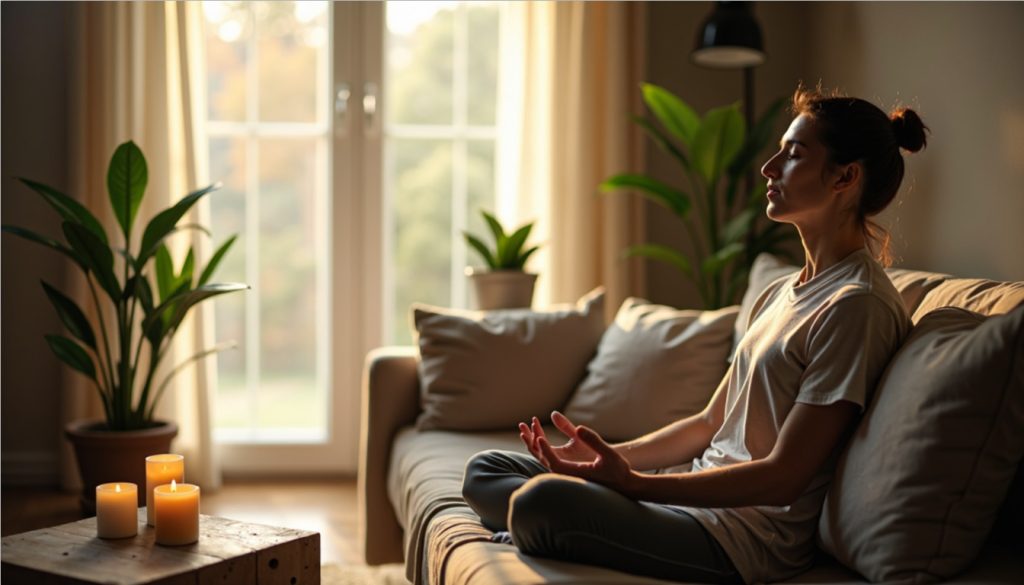
Breathing is a natural skill that can bring deep calm. Our breath is always with us, reminding us of the present. Yoga and meditation use breath control to calm the mind and reduce stress.
Deep Breathing Techniques
Deep breathing means taking slow, deep breaths through the nose. Hold the breath for a few seconds, then exhale slowly through the mouth. This lowers heart rate, blood pressure, and promotes relaxation.
Try the 4-7-8 breathing technique, also known as the “relaxation breath.” Breathe in through your nose for a count of 4, hold for 7, and exhale for 8 through your mouth.
Guided Breathing Exercises
Guided breathing exercises follow a guide, in-person or through recordings. They’re great for beginners, teaching effective breathing for relaxation. These sessions often include visualization, making them even more effective.
Benefits of Controlled Breathing
Controlled breathing reduces stress, anxiety, and improves sleep. It calms the mind and body, leading to inner calm. Regular practice also boosts respiratory function and overall well-being.
| Breathing Technique | Description | Benefits |
|---|---|---|
| 4-7-8 Breathing | Inhale for 4 counts, hold for 7, exhale for 8 | Promotes relaxation, reduces stress |
| Diaphragmatic Breathing | Engage diaphragm, breathe deeply into lungs | Improves oxygenation, reduces anxiety |
| Box Breathing | Inhale for 4 counts, hold for 4, exhale for 4, hold for 4 | Enhances focus, calms the mind |
Adding these breathing exercises to your daily routine can increase inner calm. As you try different techniques, you’ll find what works best for you. This way, you can use your breath to relax and heal emotionally.
The Role of Meditation in Achieving Inner Peace
Meditation is a powerful tool for inner peace. It changes your mind and body. It helps you become resilient from the inside out, promoting health and healing.
“Meditation is not just a practice; it’s a journey of self-discovery and inner transformation,” many say. Adding meditation to your daily routine is a big step towards inner peace.
Types of Meditation
There are many meditation exercises to try. Some popular ones include:
- Mindfulness meditation, which focuses on being present in the moment.
- Loving-kindness meditation, which cultivates feelings of love and compassion.
- Transcendental meditation, which uses a mantra to quiet the mind.
Each type has its own benefits. You might find one you like more or mix them up.
How to Start a Meditation Practice
Starting meditation is easy. Just set aside a few minutes each day. Sit quietly, focus on your breath, and watch your thoughts without judgment. Use guided meditation exercises online or through apps to start.
As you get more comfortable, you can meditate longer and try different techniques.
Tips for Effective Meditation Sessions
Here are some tips for better meditation:
- Make a quiet and peaceful space for meditation.
- Stick to your practice, even if it’s just a few minutes a day.
- Use inner peace techniques like deep breathing to relax.
Using these inner peace techniques in your meditation can improve your well-being. It helps you get closer to inner peace.
Remember, meditation is personal and subjective. Be patient with yourself. Don’t be afraid to try different things until you find what works for you.
Harnessing the Power of Nature
The natural world is full of ways to relax and boost mental wellness. By adding nature to our self-care, we can live a more balanced life.
Benefits of Spending Time Outdoors
Being outside is good for both our minds and bodies. Nature can lower stress, make us feel happier, and even help our blood pressure. The main benefits are:
- Reduced stress and anxiety
- Improved mood and overall sense of well-being
- Enhanced creativity and focus
- Better sleep quality
Nature-Based Techniques for Relaxation
There are many ways to relax using nature. Some effective methods include:
- Mindful walking: Walking while focusing on your surroundings can calm your mind.
- Nature meditation: Using natural elements like trees, water, or birds can improve meditation.
- Gardening: Gardening can be therapeutic and help you feel grounded.
Creating a Peaceful Outdoor Space
Creating a calm outdoor area can be a great escape from daily stress. Here are some tips:
- Find a quiet spot away from loud noises.
- Add natural elements like plants, stones, or water features.
- Use comfy seating and calming colors to make it soothing.
By using nature’s power, you can find inner peace and better your well-being.
Journaling as a Tool for Self-Reflection
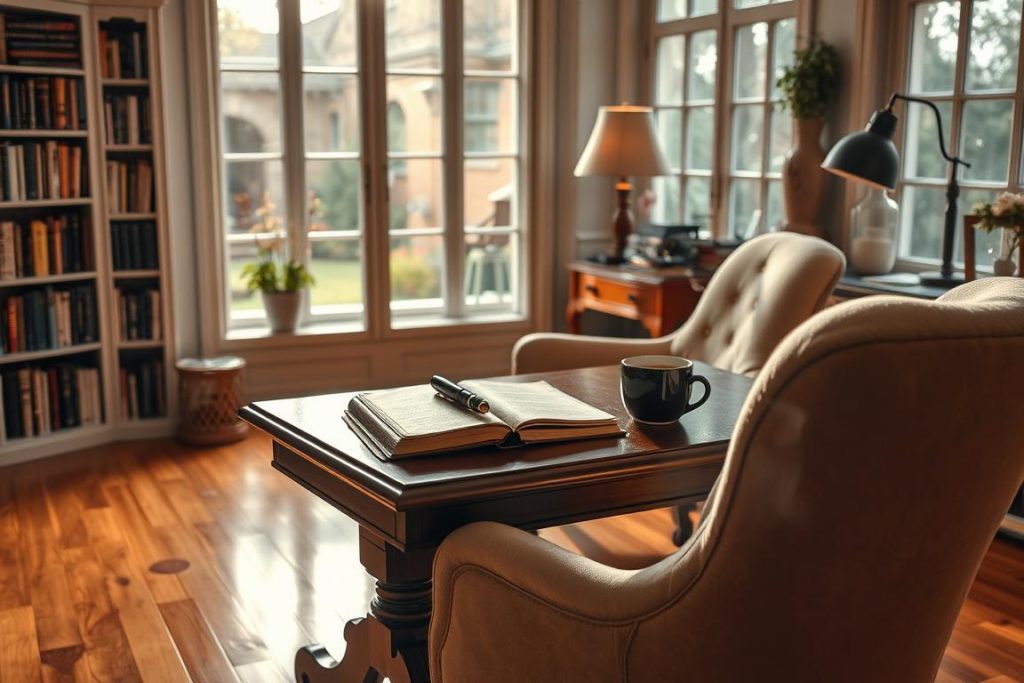
In our quest for inner peace, journaling is a great ally. It helps us understand our emotions better. By writing down our thoughts and feelings, we can make sense of our experiences.
Emotional Healing Through Journaling
Journaling is a strong tool for emotional healing. It lets us face and release our emotions, lowering stress and anxiety. As we write, we learn about our emotional patterns and what triggers them. This clarity brings us calm and well-being, helping us find inner peace.
Potiker advises us to think about what makes us happy and do it when we’re feeling down. We can apply this to journaling by exploring what we enjoy. This way, we can stay positive and build emotional strength.
Exploring Different Journaling Techniques
There are many journaling techniques to choose from. Some like morning pages, writing down thoughts in the morning without editing. Others prefer gratitude journaling, focusing on daily thanks.
Trying out different methods can help you find what works for you. Whether it’s writing, drawing, or collaging, make journaling personal and meaningful.
Tips for Maintaining a Consistent Journaling Practice
To enjoy journaling’s benefits, make it a regular part of your life. Here are some tips to help you:
- Choose a specific time and place for journaling.
- Begin with short entries and grow them as you get more comfortable.
- Try different techniques to find what fits you.
- Be gentle with yourself as you build your journaling habit.
By making journaling a daily habit, you can use it for emotional healing and inner peace. Reflecting on your experiences and emotions helps you understand yourself better. This leads to greater mindfulness and well-being.
The Practice of Gratitude
Gratitude is a powerful tool for inner peace. Focusing on what you’re thankful for can change your view and lower stress. Try simple daily practices to feel the joy of gratitude.
Understanding Gratitude and Its Benefits
Gratitude is more than saying “thank you.” It’s a way to see and value the good in your life. Studies show it boosts mental health, sleep, and relationships. Being grateful can help you manage stress and improve your life.
Gratitude Journals: How to Start One
Keeping a gratitude journal is a great way to start. Just pick a notebook and write down three things you’re thankful for each day. It could be a good coffee or a beautiful sunset. Writing down what you’re grateful for strengthens positive thoughts and is a great way to relax.
Ways to Cultivate Gratitude Daily
There are many ways to practice gratitude every day. Here are a few ideas:
- Share your gratitude with others by expressing thanks to someone you appreciate.
- Take a moment each day to reflect on the good things that happened.
- Use visual reminders, such as a gratitude jar or a photo on your phone, to prompt you to think about what you’re thankful for.
- Practice mindfulness and be present in the moment to appreciate the small joys in life.
By adding these practices to your daily life, you can become more grateful. Enjoy the many benefits that come with it.
Physical Activities Promoting Inner Peace
Physical activities play a big role in finding inner peace. Regular exercise boosts both physical and mental health. It has a huge impact on how we feel.
The Connection Between Movement and Peace
Exercise makes our bodies release endorphins, known as natural happiness chemicals. These help lower stress and anxiety. They make us feel calm and happy.
Regular exercise also makes us feel better and handle tough times better. It helps us stay positive when life gets hard.
Yoga and Its Benefits
Yoga is great for inner peace. It mixes physical moves with deep breathing and meditation. This mix helps us feel better overall.
Regular yoga practice helps us know our body and mind better. It helps us handle stress and emotions better.
Other Physical Activities to Consider
Yoga is not the only way to find peace. Walking, jogging, dancing, or gardening can also help. The most important thing is to pick something you like and that relaxes you.
- Walking or hiking in nature
- Dancing to your favorite music
- Swimming or other water-based activities
- Cycling or other aerobic exercises
Adding these activities to your life can make you feel better mentally. It helps you find a deeper sense of peace.
Integrating Inner Peace Techniques into Your Daily Life
Exploring inner peace techniques shows how they can change your daily life. Adding them to your routine can make you face challenges with calm and clarity. This helps you stay mentally well.
Establishing a Daily Practice
First, pick a few inner peace methods that feel right to you, like mindfulness or deep breathing. Start small, like meditating or journaling for a few minutes each morning. As you get used to it, you can do more and go deeper.
Realistic Goals for Inner Peace
It’s important to set goals you can reach. Be kind to yourself and remember that finding inner peace takes time. Celebrate your wins and don’t get down about the tough times.
Sharing Your Journey
Talking about your journey with others can help you and inspire them. Laura Potiker says, “It’s about learning to pause before reacting.” By sharing your inner peace practices, you help create a more peaceful world.
