


Did you know a dedicated space for mindfulness can boost your emotional health? Creating a sanctuary is a personal act that can change your life. It’s where you reflect, practice mindfulness, and care for your emotional health.
In many spiritual and cultural practices, a holistic sanctuary design is key. It’s a place for reflection and emotional care. By adding elements that bring peace, you can make a space for growth and healing.
Key Takeaways
- Create a dedicated space for mindfulness and reflection to enhance emotional well-being.
- Incorporate elements that promote serenity and calmness in your sanctuary.
- Make your sanctuary a personal and intentional space that fosters growth and healing.
- Use spiritual sanctuary architecture principles to design a peaceful haven.
- Transform your life by making your sanctuary a priority.
Understanding Sacred Space Creation
A sacred space is more than a place; it’s a haven for your spirit and soul. It’s vital to grasp its importance and how it impacts your life.
What is Sacred Space?
A sacred space can be many things, like a sacred pagoda design or a personal altar. It can also be a calm outdoor spot for meditation retreat planning. It’s a place to step away from the world and find inner peace. The space’s design matters less than the energy and purpose behind it.
The Importance of Sacred Space in Daily Life
Having a sacred space in your life can deeply affect your well-being. It offers a place for reflection, meditation, and relaxation. Tailoring a space to your needs can boost your spiritual growth and creativity. It’s great for reducing stress or finding a quiet spot to relax.
Creating a sacred space, like building a sacred altar, helps you set personal growth goals. It’s a journey to connect more deeply with yourself and the world.
Benefits of Creating a Sacred Space
Creating a sacred space in your home can change your life. It helps you connect with yourself and the world. This special area is a place to escape daily stress and find peace.
Spiritual Growth and Reflection
A sacred space is perfect for growing spiritually and reflecting. Adding sacred geometry boosts the divine energy, helping you transform. It becomes a tool for personal growth as you think about your goals.
“The space in which we live and move is not just a container for our lives, but an integral part of our being.”
Reflecting and meditating in this space deepens your self-understanding. It’s where you connect with your inner self and explore your spirituality.
Improved Focus and Productivity
A sacred space also boosts your focus and productivity. A clean and peaceful area helps you concentrate better. Adding zen garden landscaping brings calm, making you more focused and driven.
Working or studying in this space keeps you motivated. The positive energy and design help you reach your goals more efficiently.
Enhanced Creativity and Inspiration
A well-designed sacred space sparks creativity and inspiration. Adding personal symbols, meaningful objects, and inspiring art sparks new ideas. Sacred geometry incorporation adds to the creativity, encouraging innovative thinking.
- Use natural elements like plants and stones to bring in earthy vibes.
- Incorporate inspiring quotes or artwork that resonate with your personal journey.
- Experiment with different colors and textures to create a visually appealing space.
Spending time in your sacred space inspires you. It guides you toward new possibilities and opportunities.
Choosing the Right Location for Your Sacred Space
Finding the perfect spot for your sacred space is key. It helps you connect deeper with yourself and the world. The location, whether indoors or outdoors, greatly affects the space’s feel and use.
When picking a spot, you must choose between indoors or outdoors. Each has its own benefits. The best choice for you depends on what you like and need.
Indoor vs. Outdoor Spaces
Indoor spaces are cozy and private. They’re great for creating a quiet spot. Outdoor spaces, with their natural elements, offer a unique experience each time.
Having both indoor and outdoor spaces is good. It lets you enjoy different settings based on the weather and your mood. For example, an indoor space is cozy in bad weather, while an outdoor space is better in good weather.
Considering Natural Light and Ambiance
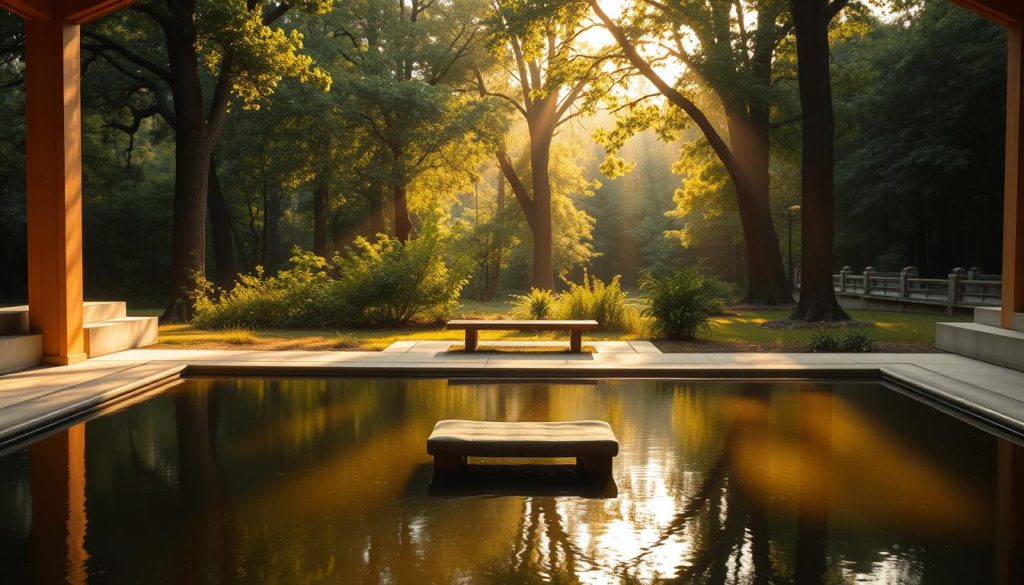
Natural light is very important for your sacred space. It affects the space’s feel and energy. Choose a spot with lots of natural light to create a warm and welcoming vibe.
Think about the ambiance you want in your space too. Consider colors, textures, and scents that calm you. By choosing these carefully, you can make a space that nourishes your mind, body, and spirit.
By picking the right location for your sacred space, you can make a holistic sanctuary. This sanctuary will support your spiritual growth and well-being.
Key Elements to Include in Your Sacred Space
Designing your sacred space is key to its meaning. A well-made space can boost your meditation retreat planning and spiritual growth.
First, keep your space clutter-free. Clutter hinders focus and purpose. Clean and organize regularly to keep its energy strong.
Clutter-Free Environment
A clutter-free space is vital. It clears your mind and brings calm. Set up a decluttering routine and choose items wisely.
Personal Items and Symbols
Adding personal items and symbols makes your space more powerful. Think about crystals, icons, or mementos that connect with your goals. For instance, a statue or image that symbolizes your spirituality.
Choose items that hold deep meaning and make you feel good. This way, your space will support your spiritual practices, like sacred altar construction.
Natural Elements and Textures
Introduce natural elements and textures for warmth and depth. Plants, wood, stone, or fibers connect you to nature. They also improve your space’s feel.
With these elements, you’ll have a beautiful, meaningful space. It will support your spiritual journey and inner peace.
Setting Intentions for Your Sacred Space
A sacred space needs intention to come alive. It’s what gives it purpose and direction. Setting clear intentions turns your space into a tool for growth and spiritual exploration.
Crafting a Personal Mission Statement
Writing a personal mission statement for your space is meaningful. It defines the space’s purpose and your goals. This statement guides you, keeping your space aligned with your journey.
Think about what you want from your sacred space. Do you seek spiritual growth, a nature connection, or a place for meditation? Your mission statement should reflect your true desires.
For instance, your statement could be, “I intend to use this space for daily meditation, seeking inner peace and clarity.” Make sure it truly speaks to you and aligns with your aspirations.
“The space in which we live should be for the body, what books are for the mind; that is, a source of inspiration.”
Aligning the Space with Your Goals
With a clear mission statement, align your space with your goals. Think about the layout, elements, and energy to support your intentions. Divine energy alignment helps direct the space’s energy towards your goals.
Sacred geometry incorporation also boosts your space’s energy. It uses geometric patterns believed to hold spiritual power. These elements create a harmonious space that supports your intentions.
| Element | Purpose | Example |
|---|---|---|
| Crystals | Amplify energy and intention | Placing a quartz crystal in the center of the space |
| Sacred Geometry | Balance and harmony | Incorporating a mandala or geometric pattern on the wall |
| Plants | Nature connection and vitality | Adding a few green plants around the space |
By setting intentions and aligning your space, you create a transformative environment. It nurtures your body, mind, and spirit.
Tips for Decorating Your Sacred Space
Decorating your sacred space is more than looks. It’s about making a place that feeds your soul. The right decor can make your space a true sanctuary. Here, you can find peace and connect with yourself.
Color Psychology in Sacred Spaces
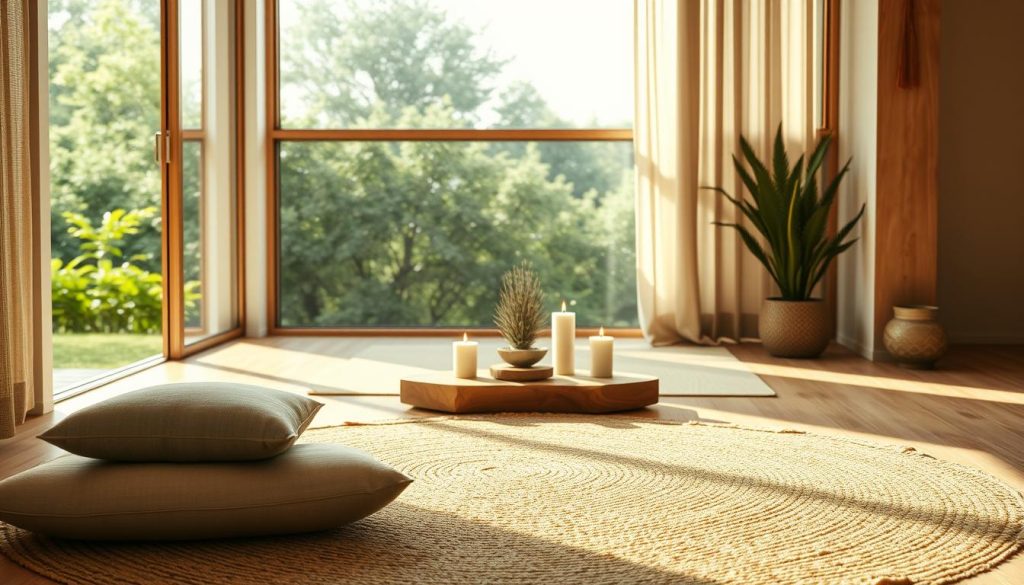
Colors deeply affect our feelings and energy. Pick colors that match the mood you want. Blues and greens calm you, while yellows and oranges boost creativity and happiness.
To pick the right colors, consider:
- Choose colors that match your energy
- Use a main color and add secondary ones
- Think about how natural light changes your colors
Incorporating Textures and Fabrics
Textures and fabrics make your space cozy and personal. Natural materials like wood and stone add an organic feel. This makes your sanctuary feel more real.
Here are ways to add texture:
- Use plush rugs and comfy chairs
- Add plants and branches for a natural touch
- Decorate with items from nature
Using Lighting to Create Atmosphere
Lighting changes your space’s feel. Soft, warm light makes it cozy, while bright light energizes it.
Here are lighting tips:
- Use dimmable lights to change the mood
- Try candles or fairy lights for a soft glow
- Let in natural light to keep it fresh
By decorating with color, texture, and light, you make a holistic sanctuary design. It supports your body, mind, and spirit. Whether inspired by zen garden landscaping or other styles, make it your own. Your space should feel true to you and support your journey.
Maintaining Your Sacred Space
A sacred space needs care to stay effective and nurturing. Regular upkeep is key. This means cleaning and keeping the energy vibrant.
Cleaning and Decluttering
Cleaning and decluttering are key to keeping your sacred space. Clutter can make the space feel heavy and dull. Set aside time each week to tidy up and keep things in order.
When decluttering, focus on items that are meaningful or peaceful. Think about how each object affects your space’s energy. Having a routine, like daily or weekly check-ins, helps keep the space calm.
Rituals for Energy Flow
Adding rituals can boost your space’s energy flow. Try lighting candles, burning incense, or playing calming music. Meditation or deep breathing can also help you connect with the space.
Having a daily or weekly ceremony can make your space even more special. This could be setting intentions, practicing gratitude, or simply acknowledging the space’s importance. These rituals make your space a true sanctuary for growth and reflection.
By cleaning, decluttering, and adding rituals, you keep your sacred space vibrant. This not only improves your well-being but also deepens your connection with the space.
Inviting Calm and Peace into Your Sacred Space
Creating a sacred space is all about inviting calm and peace. A peaceful environment boosts your spiritual growth and well-being.
Mindfulness Practices to Utilize
Mindfulness is key to calm and peace in your space. Meditation retreat planning is a great way to start. It helps quiet your mind and connect with yourself.
Adding mindfulness to your day is easy. Just take a few deep breaths or do a short meditation. Yoga or tai chi can also deepen your connection with your space.
Creating a Daily Routine for Connection
Having a daily routine keeps your space peaceful. Choose a time each day to connect with it. It could be morning or before bed, whatever suits you.
Your routine might include journaling, reading, or just sitting in silence. The goal is to nourish your mind, body, and spirit with a consistent practice.
| Daily Routine | Benefits | Tips |
|---|---|---|
| Meditation | Reduces stress, improves focus | Start with 5-10 minute sessions |
| Journaling | Enhances reflection, clarifies thoughts | Write without judgment or editing |
| Reading Spiritual Texts | Inspires spiritual growth, provides guidance | Choose texts that resonate with you |
By using mindfulness and a daily routine, you can turn your space into a holistic sanctuary design. It will nurture your well-being.
Sharing Your Sacred Space with Others
After creating your sacred space, you might want to share it with others. This can make the space’s energy stronger and build a community. Sharing your space opens doors to new experiences and connections.
Hosting Meaningful Gatherings
You can host gatherings and ceremonies in your space. These events bring people together, creating unity and shared goals. Your space can be a place for like-minded people to connect and grow.
Think about adding elements of sacred altar construction. This can help focus the group’s energy and intentions.
Cultivating Collective Energy
To build collective energy, guide the group in setting a shared intention. Or, lead a group meditation. This aligns the space’s energy with the divine, creating a powerful experience.
By sharing your space, you spread positivity and connection. This effect goes beyond your personal practice.
FAQ
What is a sacred space, and how can it benefit my life?
A sacred space is a special area for reflection and mindfulness. It helps with spiritual growth, focus, and creativity. Creating such a space can greatly improve your life.
How do I choose the right location for my sacred space?
Think about whether you want it indoors or outdoors. Natural light and ambiance are key. They help create a peaceful environment for reflection.
What elements should I include in my sacred space?
Keep it clean and add personal items that mean something to you. Natural elements and textures add warmth and depth.
How can I set intentions for my sacred space?
Write a personal mission statement to stay focused. Use sacred geometry and divine energy to support your goals.
What are some tips for decorating my sacred space?
Use color psychology and textures to make it beautiful and nurturing. Zen gardens and holistic design can also enhance your space.
How do I maintain my sacred space?
Keep it clean and decluttered. Use rituals to maintain energy. Meditation and altar construction are good practices.
Can I share my sacred space with others?
Yes, sharing can boost its energy and create community. Host gatherings and ceremonies to share intentions.
How can I invite calm and peace into my sacred space?
Practice mindfulness and daily routines. Meditation and deep breathing can bring calm and peace.
What is the significance of sacred geometry in sacred space creation?
Sacred geometry aligns your space with divine energy. It makes your space more effective and nurturing. Use specific shapes and patterns.
How can I ensure my sacred space remains a nurturing sanctuary?
Regular maintenance is key. Clean and declutter often. Add new elements and practices to keep it nourishing.
