


Did you know that nearly 40% of people who sense deep, unexplained bonds report physical warmth or pressure in the chest when they reflect on those ties?
I’ve seen that curious mix of memory and feeling show up again and again. If you notice patterns, déjà vu, or a steady pull toward certain people or places, this is where that thread starts to make sense.
Opening this center of feeling can bring warmth, more empathy, and a clearer sense of balance. People often describe shifts as simple physical signs—pulsing, tingling, or a gentle pressure—alongside sudden waves of compassion or release.
I’ll help you notice early signs without overthinking them. You’ll learn small, practical steps to stay steady while you explore a softer, more connected way of living.
Key Takeaways
- I’ll show why tuning into the heart chakra matters for past-life connections and present relationships.
- Expect both physical and emotional signs when a gentle opening begins.
- Simple, daily practices can help you stay grounded during shifts.
- A clear, heart-led approach can guide choices with calm and purpose.
- This guide stays practical and gentle—no pressure, just steady steps toward more connection.
What the Heart Chakra Is and Why It Matters Right Now
Imagine a green lotus at the chest’s center that quietly shapes how you connect with others and yourself. I’ll keep this simple: the anahata chakra sits at the center of your chest near the heart. It carries a green vibe and speaks to healing, renewal, and steady growth.
Anahata basics: location, color, symbolism
This energy center is pictured as a green lotus with 12 petals. Teachers link it to the air element, breath, and expansion. In practice, visualize soft green light and gentle inhalations filling your chest.
The bridge between lower and upper systems
Why it matters now: the center acts as a bridge between grounded, physical needs and higher consciousness. When this hub finds balance, your emotions, relationships, and sense of compassion align more clearly.
- I’ll show how this center influences love, trust, and self-acceptance.
- Expect a realignment across your chakras when energy flows smoothly.
- Remember: a heart chakra opening is a process. It invites presence, not avoidance.
Heart Chakra Awakening
When this center begins to open, the first signs often show up in your body before your mind catches on.
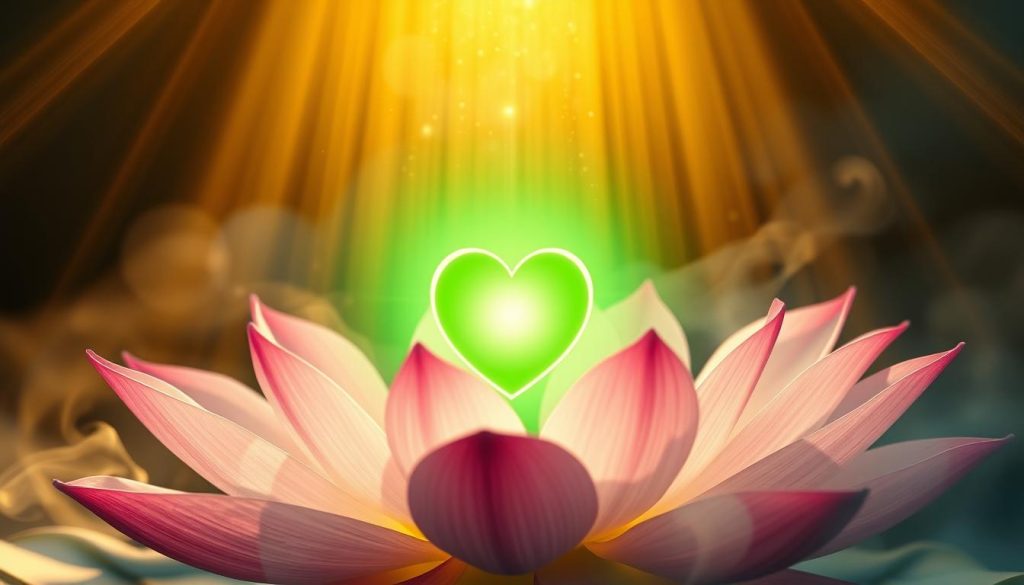
How it feels in the body: you may sense warmth, tingling, gentle pressure, or a pulsing in the chest. Some people notice tightness between the shoulder blades or a loose ache in the back as energy shifts.
Emotional changes often follow. You might cry without warning or laugh at small things. These waves are usually release, not breakdowns. Over time, a calmer baseline and more compassion surface.
Mind, spirit, and simple neuroscience
Thinking often softens into feeling. Empathy rises and relationships can feel clearer. On a brain level, regions like the insula and the anterior cingulate cortex support emotional processing and compassion, which helps explain why your reactions may feel both physical and mental.
- Notice chest sensations and rest when needed.
- Hydrate, pause meditation, or sit quietly if feelings intensify.
- Track symptoms gently — they often ebb and flow.
Practical note: focus on gentle breathing and simple anahata chakra practices to soften defenses and invite forgiveness, starting with yourself. Small, steady steps help keep energy balanced and support lasting healing.
Top Signs Your Open Heart Is Emerging
You may notice small shifts in your body and life that quietly point to an open heart. I’ll lay out clear signs and symptoms so you can observe without alarm.
Physical signals: warmth or tingling in the chest, a light pressure or palpitations, breathlessness, sweating, and sometimes upper-back ache as blocked energy releases. These symptoms often come in waves.
Emotional indicators: spontaneous compassion, easier forgiveness, steady joy, gratitude, and an expanding inner peace. You might cry or laugh more easily—these are healthy releases.
Relational shifts: deeper connections, fewer power struggles, and a pull toward altruism. You’ll likely notice more honest listening and small acts of love in everyday life.
Spiritual markers: clearer intuition, powerful or lucid dreams, and a gentle sense of unity with life. These moments can feel guiding, not overwhelming.
- Signs and symptoms often cycle—observe them without chasing.
- Track times of day when your energy feels more open to notice your natural flow.
- Brief, regular meditation helps you meet changes with calm and clarity.
Practical note: the anahata chakra’s qualities of compassion and love can become practical tools for how you speak, set boundaries, and show up in relationships.
Symptoms of Heart Chakra Opening vs a Blocked Heart Chakra
Changes in mood, relationships, and body signals can reveal whether your energy is flowing or stuck. I’ll walk you through common signs so you can spot shifts without panic.

Opening: liberation and smoother energy
Opening often shows as emotional release — crying or laughing with ease — and a lighter, more optimistic outlook.
You may feel more forgiving and open to love. Energy moves more smoothly and daily life feels balanced.
Blockage: numbness, jealousy, isolation
A blocked heart can look like emotional numbness, persistent jealousy, or pulling away from close people.
Unresolved grief, fear of intimacy, grudges, or pessimism are red flags that old hurts are still lodged in the center.
When physical symptoms need medical attention
Some imbalances create chest tightness, breath issues, or changes in blood pressure. Back pain between the shoulder blades may also appear.
If you have persistent chest pain, shortness of breath, or strong cardiovascular symptoms, seek medical care immediately.
| Sign | Opening | Blocked |
|---|---|---|
| Emotional tone | Release, forgiveness, positivity | Numbness, grudges, fear of intimacy |
| Behavior | More giving, honest communication | Isolation, withdrawal, jealousy |
| Physical | Warmth, gentle pressure, brief back ache | Chest tightness, breath issues, blood pressure shifts |
| When to act | Self-care, rest, gentle movement | Contact a healthcare provider for persistent symptoms |
Quick self-check: notice if your body relaxes after an emotional release or if feelings stay stuck. If emotions spike, ground with breath, hydrate, and rest. I encourage compassion for yourself while you sort symptoms from real health concerns.
Practical Ways to Support an Opening Heart
You don’t need long rituals; a few focused minutes of care can shift energy and invite more ease. I’ll offer simple tools you can try today to support an open heart chakra and steady emotional balance.
Meditation and breathwork for emotional balance
Try a 5–10 minute meditation: steady breath, imagine a soft green light at your chest, and repeat one clear affirmation. I use phrases like “I am open to love” or “I forgive myself and others.”
Short sessions build emotional balance without overwhelm. Use this flow before meetings or at bedtime.
Heart-opening yoga sequence
Move through camel, bridge, cobra, bow, and wheel slowly. These poses stretch the chest and upper body to encourage healthy energy flow.
Adapt each pose to your needs. Even one pose for a minute helps.
Affirmations, crystals, and oils
Affirmations like “I welcome love” anchor compassion and inner peace. Keep them simple and repeatable.
Crystals such as rose quartz, green aventurine, jade, and malachite can sit on the center of the chest or be worn.
Essential oils — rose, lavender, bergamot — work well in a diffuser or applied carefully at the center during practice.
Pacing and daily ways to stay consistent
- Two minutes of breath before a call.
- One gentle pose after work.
- Track what helps and build consistency slowly.
Practical tip: end each session by grounding—feel your feet, inhale calm, and carry a small sense of inner peace into the day.
Creating Balance Across Chakras for a Smoother Flow
Before widening your awareness, I recommend building a stable foundation you can return to.
Start with the root chakra for stability
Teachers often advise beginning at the root chakra to ground the system. When the base feels steady, emotional openings are safer and easier to manage.
Harmonizing sacral and solar plexus with the heart
Work the sacral chakra for creativity and feeling, then the solar plexus chakra to support will and confidence. Together they feed the heart chakra so your compassion has backbone, not overwhelm.
Throat, third eye, and crown alignment for conscious connection
Once the bridge is steady, the throat and third eye chakra tune communication and inner sight. An aligned crown supports broader consciousness and clearer choice in the world.
- Weekly plan: root grounding, sacral flow, solar plexus activation, heart-centered close.
- Keep it simple: short daily practices help energy feel coherent rather than scattered.
- Result: calmer decisions, kinder boundaries, and clearer connection with others.
Conclusion
You can learn to read subtle changes as honest guides, not alarms.
I recap the clearest signs so you can trust what you feel: warmth or pressure in the chest, sudden emotional release, shifts in relationships, and clearer empathy. These symptoms often signal a deeper change in energy and emotions.
Keep momentum with one simple habit: a five-minute meditation plus a single heart-opening pose you enjoy (bridge or gentle backbend). Do this most days and notice how love and forgiveness grow in small ways.
Relationships often shift—more honesty, softer compassion, and firmer boundaries are normal. If chest symptoms persist or feel serious, seek medical care—your health matters most.
Go at your pace, journal symptoms and gratitude, and let this way of healing unfold in your life and world.
FAQ
What does “Unlock the Mystery of Your Past Life Connections” mean?
It points to exploring patterns and relationships that feel familiar across lifetimes. I mean investigating memories, recurring dreams, and emotional triggers to see where old ties show up now. This can help you understand why certain people or situations keep repeating and how to heal or learn from them.
What is the anahata center and why is it important right now?
The anahata center sits in the chest area and is often linked to green. It acts as a bridge between lower physical needs and higher spiritual awareness. Right now many people are focused on balance, connection, and healing, so tending this center supports empathy, healthy relationships, and inner peace.
How do I recognize basic signs like location, color, and symbolism?
The center feels like a middle point in the torso, often visualized as green or soft pink. Symbolically it represents love, compassion, and balance. You might sense warmth or openness there during meditation or when you feel deep care for someone.
How does opening this energy center feel in body, mind, and spirit?
Physically you may feel warmth, tingling, pressure, or a lighter chest. Mentally, thoughts shift toward compassion and letting go of old hurts. Spiritually, people report a sense of unity, clearer intuition, and peaceful presence. The experience varies, but it generally feels like more flow and less resistance.
Is there any neuroscience behind increased empathy and emotional change?
Yes. Brain areas like the insula and anterior cingulate are tied to empathy and emotion regulation. When you practice mindfulness, compassion meditation, or relational healing, these regions can become more active and connected, which supports greater empathy and emotional balance.
What are common physical sensations when an open center emerges?
You might notice warmth, tingling, pressure, or occasional palpitations in the chest. These sensations often come with deeper breathing and a sense of expansion. If anything feels sharp, intense, or lasts long, check with a medical professional to rule out health issues.
What emotional signs suggest it’s opening—compassion, forgiveness, joy?
Look for increased capacity to forgive, more spontaneous joy, and a steady sense of inner peace. You may find yourself feeling genuine compassion for others and a softer response to triggers that used to shut you down.
How do relationships change when this center becomes more active?
Relationships often deepen. You may connect with people more honestly, set kinder boundaries, and act with more generosity. Some ties shift or drop away if they no longer serve your growth, while others become more harmonious.
What spiritual markers might appear—intuition, vivid dreams, heightened awareness?
Many report clearer intuition, meaningful dreams, and a stronger sense of unity with life. You might notice synchronicities or feel more drawn to practices that support presence and compassion.
How can I tell opening symptoms from a blocked state?
Opening brings release, warmth, and positive shifts in emotions. Blockage shows up as numbness, jealousy, isolation, or stuck grief. Notice whether energy moves and feelings flow, or whether they remain rigid and repetitive.
When should I seek medical attention for sensations in the chest?
If you experience severe pain, shortness of breath, dizziness, or prolonged palpitations, seek emergency medical care. Spiritual practices can support well‑being, but they don’t replace medical evaluation for serious symptoms.
What daily practices support a gentle opening—meditation and breathwork?
Simple practices help: mindful breathing focused on the chest, loving‑kindness meditation, and heart-centered visualizations. Short, consistent sessions—five to twenty minutes—can shift your emotional balance over time.
Which yoga poses help open the center—camel, bridge, cobra, bow, wheel?
Poses that lift and expand the front of the torso are helpful. Camel and bridge gently open the chest; cobra and bow encourage backbending and heart lift; wheel is more intense and is great when you have a solid foundation and good alignment.
What affirmations support more love and compassion?
Use short, present‑tense phrases like “I am open to giving and receiving love,” or “I forgive and free myself.” Repeat them with breath, and let the words settle into emotion rather than just the mind.
Which crystals are traditionally used for healing—rose quartz, green aventurine, malachite, jade?
Rose quartz and green aventurine are classic choices for soothing and opening. Malachite supports transformation, and jade brings balance. Carry them, place them on your chest during rest, or keep them near your space as supportive reminders.
Are there essential oils that help when applied to the chest—rose, lavender, bergamot?
Rose oil is known for connection and tenderness. Lavender calms, and bergamot lifts mood. Dilute properly in a carrier oil and apply lightly to the upper chest, or use a diffuser to create a gentle atmosphere for practice.
How do I create balance across centers for smoother flow?
Start from grounding support in the root, then bring stability to the sacral and power to the solar plexus before opening the chest. Afterward, harmonize throat, third eye, and crown so communication and insight match your compassion.
Why begin with the root and not jump straight to the chest?
A stable foundation helps you hold new sensitivity without feeling scattered. Root work builds safety and presence so emotional expansion can be integrated and steady rather than overwhelming.
How do sacral and solar plexus work with the chest for emotional balance?
The sacral relates to creativity and desire, the solar plexus to will and boundaries. When they harmonize with the chest, you feel passionate, grounded, and able to give love without losing yourself.
How do throat, third eye, and crown alignment support conscious connection?
Throat alignment helps express what you feel, third eye sharpens inner guidance, and crown links you to broader awareness. Together they let your compassion be wise and communicative, not just reactive.
