


Just as a low drone vibrates your bones, you sense how sound healing and healing frequencies can recalibrate mood and physiology; you explore the science of resonance, solfeggio frequencies, and vibrational therapy, feeling rhythmic pulses that soothe or shift emotion. With authority, the post guides you to use sound medicine and energy healing music safely-avoid intense frequencies if your nervous system is overwhelmed-and invites curiosity as you integrate practice into daily spiritual life.
The Connection Between Sound and Energy
You sense how sonic patterns move through tissue and field, reorganizing energy in measurable ways: human hearing spans roughly 20-20,000 Hz, while vibrational therapy commonly employs tones like the solfeggio series (396, 417, 528, 639, 741, 852, 963 Hz) and infrasonic textures to shift physiology; practitioners report shifts in heart-rate variability and relaxation within 5-10 minutes, making sound a fast, tangible conduit between external frequency and your internal energy.
Understanding Vibrations
You notice that vibration produces resonance at multiple scales – from cymatics patterns in sand to cellular mechanotransduction – so sustained frequencies can entrain tissues and neural rhythms; for example, tuning A=432 Hz versus A=440 Hz alters timbre and perceived calm, and energy healing music that sustains a target Hz can synchronize breathing and pulse, amplifying therapeutic impact when used alongside breathwork.
The Role of Consciousness in Healing
You direct how sound lands: intention and attention modulate autonomic response, shifting brainwaves into Delta (0.5-4 Hz), Theta (4-8 Hz), Alpha (8-12 Hz) or higher ranges through entrainment; clinical and EEG observations show that focused listening or guided intent often enhances outcomes, so your deliberate focus can materially increase the effectiveness of sound medicine.
You can apply this: combine a 528 Hz solfeggio track with paced breathing (4-4-6 counts) for 10-20 minutes daily, set a clear healing intention, and monitor changes-many report deeper alpha coherence within 5-10 minutes; keep volume safe (under 85 dB) to avoid hearing damage, and use biofeedback or simple pulse measures to track how your conscious engagement with sound shifts physiological markers over repeated sessions.
The Science of Sound Healing
Scientists and practitioners map how sound healing and healing frequencies alter physiology: you feel shifts in heart rate, breathing, and mood as vibrations entrain neural rhythms and tissues. Ancient tools like the six-tone solfeggio frequencies (396-852 Hz) meet modern measures such as heart rate variability and cortisol assays, showing that targeted tones can produce measurable relaxation and cognitive shifts when delivered with intention and safe volume.
Research and Evidence
Across small RCTs and pilot studies (often n=20-100), researchers report reduced anxiety, improved sleep, and mood lifts after sessions of sound medicine and energy healing music; animal work using 40 Hz stimulation altered neural markers. You should note that many trials are preliminary, but meta-analyses indicate consistent directionality toward benefit, especially for stress-related outcomes.
Mechanisms of Vibrational Therapy
Vibrational therapy works through resonance, entrainment, and mechanotransduction: when you experience tones your brain exhibits a frequency-following response (delta 0.5-4 Hz, theta 4-8, alpha 8-12, beta 13-30, gamma >30), the vagus nerve modulates parasympathetic tone, and tissues respond to low-frequency vibration with cellular and circulatory changes; these pathways explain how sound impacts body and mind.
For deeper context, tactile modalities like vibroacoustic chairs deliver low frequencies (roughly 20-120 Hz) that you feel as much as hear, while tuning forks and bowls create localized resonance; studies measuring HRV, EEG, and cortisol before and after sessions show shifts that align with reported calm-yet you must avoid high volumes and seek medical advice if you have seizure disorders or acute conditions, since certain stimuli may pose risks.

Tools for Sound Healing
Your toolkit for sound healing blends ancient instruments and modern frequency music: singing bowls, tuning forks, gongs, chimes, and curated tracks of healing frequencies. Practitioners often work with solfeggio frequencies (396-852 Hz), 432 Hz or 528 Hz, and sessions commonly last 20-45 minutes to allow nervous-system entrainment. Use calibrated tools and moderate volume; excessive loudness can provoke dizziness or tinnitus, while mindful application supports deep vibrational therapy and energy healing music practices.
Singing Bowls and Their Benefits
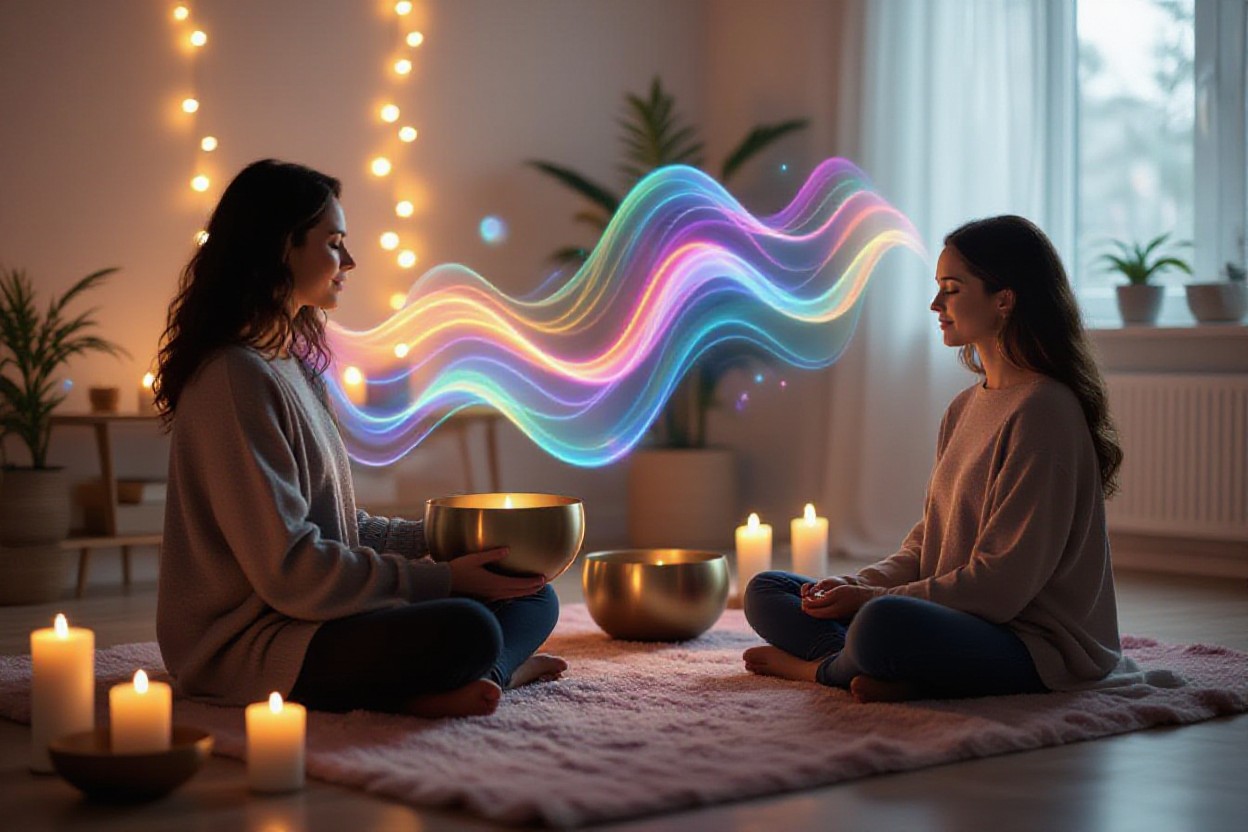
When you strike or rim a Himalayan or crystal singing bowl, you generate layered overtones-sustains often lasting 20-60 seconds-that physically ripple through tissue and breath. Larger bowls produce low, chest-felt tones useful for grounding; smaller bowls create higher, brain-resonant pitches for mental clarity. Clinical and practitioner reports link 20-40 minute bowl sessions to reduced anxiety, slowed heart rate, and clearer breath patterns; use a soft mallet and steady circular motion to maximize resonance.
Tuning Forks and Frequency Music
Tuning forks deliver precise, repeatable tones-common therapeutic pitches include 128 Hz (grounding), 256 Hz (octave), and 528 Hz from solfeggio work-and are ideal for targeted entrainment. You can strike a fork and place the stem on a bone (sternum, mastoid) or hover near a chakra for 2-5 minutes per point to shift local tissue and nervous response. Precision in Hz allows you to tailor sound medicine to specific energetic or somatic goals.
Weighted versus unweighted forks offer different effects: weighted forks produce a longer, stronger sustain for direct bodywork and are often used in 2-5 minute placements on acupoints, while unweighted forks suit subtle field tuning and auditory tests. Combine forks with frequency-based recordings-binaural-beat protocols (difference frequencies 4-30 Hz) for brainwave entrainment or energy healing music tracks of 20-60 minutes-to extend effects. Exercise caution if you have a seizure disorder or intense sensory sensitivity; avoid high-volume or prolonged binaural stimulation.

Historical Practices of Sound Healing
Across cultures you encounter practices that used vibration as medicine: Vedic chant cycles, Pythagorean monochord tuning, Tibetan singing bowls and shamanic drumming. Archaeological and textual records show builders of ritual sound systems aiming for balance with the body’s rhythms; solfeggio frequencies like 528 Hz reappear in modern retellings. For a concise overview of these lineages see A Guide to Sound Healing.
Ancient Civilizations and Sound
In India you find millennia-old Vedic recitations tuned to microtones that map to chakras, while Pythagoras formalized intervals-octave 2:1, fifth 3:2-to explain physiological harmony. Egyptian priests used the sistrum and mantra-like refrains in temple rites; Indigenous cultures employed flutes and drums to entrain communal heart rates. Archaeological flutes date back tens of thousands of years, showing that vibration has long been woven into healing rituals.
Modern Adaptations and Techniques
Contemporary practice blends tradition with technology: you can attend a sound bath with crystal bowls, listen to binaural beats targeting delta/theta for sleep, or experience vibroacoustic therapy that applies low frequencies to the body. Practitioners often layer energy healing music with measured tones-432 Hz, 528 Hz-while using biofeedback to fine-tune sessions.
Clinics typically deliver vibroacoustic sessions of 30-45 minutes using low frequencies (20-150 Hz) through transducers placed on the body; audiology guidance warns to avoid prolonged exposure above 85 dB to protect hearing. You’ll find protocols of 1-3 weekly sessions over 3-8 weeks in trials reporting improvements in anxiety, pain perception and sleep quality, illustrating how ancient methods have been quantified and adapted for modern therapeutic settings.
Creating a Personal Sound Healing Practice
Setting Intentions and Space
Start by writing a single, clear intention for each session-healing a tight jaw, calming anxiety, or opening creative flow-and place it where you can see it. Arrange lighting, a cushion, and a single instrument or playlist tuned to your chosen frequency (try a solfeggio set: 396, 417, 528, 639, 741, 852 Hz or 432 Hz for warmth). You might spend 2-5 minutes grounding with slow breaths, then set a timer for 10-20 minutes to hold focus.
Integrating Sound Healing into Daily Life
Weave short practices into routine moments: a 3-7 minute 528 Hz breathing track in the morning, a 10-15 minute Tibetan bowl session before sleep, or energy healing music during a 20-minute walk. Use binaural-beat sessions of 10-30 minutes for concentration, but keep volume safe-use a decibel app to stay below 85 dB to protect hearing. Track changes in mood or sleep across 2-4 weeks to fine-tune what works.
For more depth, create a weekly plan: three focused sessions (20-30 minutes) alternating between vocal toning, tuned instruments, and recorded solfeggio frequencies, plus daily micro-sessions (1-5 minutes) for transitions. Try pairing sound with breath counts (inhale 4, exhale 6) and note objective markers-sleep duration, resting heart rate, or a 1-10 stress scale-so you can see shifts over 3-6 weeks. If you use speakers or headphones, measure loudness and favor lower volumes for longer exposure; a simple log helps turn feeling into data and refines your personal protocol.
The Impact of Sound on Mental Health
You experience sound healing as more than soothing music; it actively reshapes brain states by shifting brainwaves into alpha and theta ranges, engaging limbic circuits that govern mood. Studies and clinical reports link vibrational therapy and sound medicine to reduced anxiety and improved sleep, while practitioners use solfeggio frequencies and binaural beats tuned to 4-13 Hz to guide relaxation. Practical use-daily 10-30 minute sessions of energy healing music-can produce measurable shifts in attention, stress markers, and emotional resilience.
Reducing Stress and Anxiety
When you listen to targeted frequencies, your cortisol response and heart rate often fall as vagal tone rises; binaural-beat studies and music-therapy trials typically use 20-30 minute sessions and report moderate reductions in self-reported anxiety. Try alpha/theta entrainment or 432 Hz sound baths to downregulate the sympathetic nervous system. Keep volume safe: exposure above 85 dB risks hearing damage, so use headphones or room playback at moderate levels.
Promoting Emotional Balance
You can use healing frequencies like 528 Hz (often associated with transformation) and sequences from the solfeggio scale to recalibrate emotional patterns; small pilot studies (n≈20-50) report improved mood and reduced rumination after repeated sessions. Energy healing music that blends sustained tones, overtone-rich instruments, and slow rhythms helps your prefrontal cortex reframe stress, supporting steadier emotional regulation.
Further, practicing 10-20 minutes of focused sound medicine daily enhances heart-rate variability and strengthens parasympathetic responses in many users, a physiological sign of emotional stability. For example, alternating 5-minute breathing with 15-minute solfeggio or crystal-bowl sessions produces consistent mood gains in case series; integrate this into morning or evening ritual, and always monitor volume to protect your hearing-safe levels preserve long-term benefits.
To wrap up
Hence you feel the pulse of sound healing as measurable resonance and sacred ritual; its healing frequencies entrain your breath, recalibrate neural rhythms, and dissolve tension across your body and mind. As science maps vibration to physiology and ancient solfeggio frequencies meet modern vibrational therapy, you can use sound medicine and energy healing music to anchor presence, invite balance, and open your heart to deeper calm.
