


I remember when stress and anxiety felt overwhelming. It was like drowning in worries, unable to breathe. Then, I found mindfulness practices. Spending just a few minutes each day helped me feel calm, easing my mind and body.
The Mayo Clinic Staff says even a short mindfulness session can calm you down. This really hit home for me, showing how it improved my life. Simple methods in my daily routine cut down my stress a lot.
Key Takeaways
- Simple mindfulness practices can reduce stress and anxiety.
- Incorporating mindfulness into daily routines can improve overall well-being.
- Even a few minutes of mindfulness practice can be beneficial.
- Mindfulness practices help restore calm and inner peace.
- Regular mindfulness practice can lead to long-term stress reduction.
Understanding Meditation: What It Is and Why It Matters
Meditation has a long history, crossing many cultures and bringing benefits to both body and mind. It has been practiced for thousands of years to help people relax and lower stress. This practice is a form of mind-body medicine that helps you relax deeply and calm your mind.
The Science Behind Meditation
Research shows meditation can improve both physical and mental health. It can reduce anxiety and depression, improve sleep, and lower blood pressure. The science behind it explores how it changes the brain and nervous system, leading to relaxation and less stress.
When meditating, you focus on something specific to reach a calm and clear state of mind. This practice can change the brain’s pathways, leading to long-term changes in its structure and function.
Benefits of Practicing Meditation
Meditation offers many benefits. It can help you feel less stressed and anxious, improve your focus, and boost your overall well-being. It also helps you understand yourself and your emotions better.
Also, meditation is good for your physical health. It can lower blood pressure, reduce chronic pain, and strengthen your immune system. Regular practice can lead to a healthier, happier life.
Different Types of Meditation Techniques
There are many meditation techniques to try, each for different needs and likes. Meditation is a personal journey. What works for one might not work for another. This variety lets people find what fits them best.
Mindfulness Meditation
Mindfulness meditation is about being in the moment. It’s about watching your thoughts and feelings without judging. It helps reduce stress and brings calmness.
Key aspects of mindfulness meditation include:
- Focus on the present moment
- Awareness of thoughts and emotions
- Non-judgmental acceptance
Guided Meditation
Guided meditation follows a guide, either live or through recordings. It’s great for beginners because it offers a clear path to meditation.
“Guided meditation is an excellent way to start your meditation journey, as it provides a clear direction and helps you stay focused.”
Loving-Kindness Meditation
Loving-kindness meditation, or Metta meditation, builds love, compassion, and kindness. It’s good for emotional well-being and connecting with others.
Benefits of loving-kindness meditation include:
| Benefit | Description |
|---|---|
| Increased empathy | Enhances the ability to understand and share the feelings of others |
| Improved emotional well-being | Fosters a positive and compassionate mindset |
Transcendental Meditation
Transcendental meditation uses a mantra to quiet the mind. It aims to relax, reduce stress, and increase self-awareness.
Each meditation technique has its own benefits. They can be tailored to fit your preferences and goals. Exploring different types can improve your well-being.
Getting Started with Meditation
Starting your meditation practice is easy. First, find a quiet and comfy spot. This place should be free from distractions so you can relax.
Finding a Quiet Space
Finding a quiet spot is key for a good meditation practice. The Mayo Clinic says you can meditate anywhere. But, it’s best to start in a quiet, comfy place. Here are some tips to help you find or create that space:
- Choose a quiet corner in your home where you are less likely to be disturbed.
- Consider using a meditation room or a peaceful outdoor spot if available.
- Use elements like candles, plants, or soft lighting to create a calming atmosphere.
Choosing the Right Time of Day
The time you meditate can really affect your practice. Mornings are often recommended because they can help set a positive tone for the day. But, the best time is when it fits into your schedule.
- Experiment with meditating at different times to see what works best for you.
- Consider meditating during your lunch break or right before bed to unwind.
- Consistency is key, so try to meditate at the same time every day.
By finding a quiet space and choosing a consistent time, you’ll be well on your way to establishing a meditation practice that brings you peace and relaxation.
Mindfulness Meditation in Detail
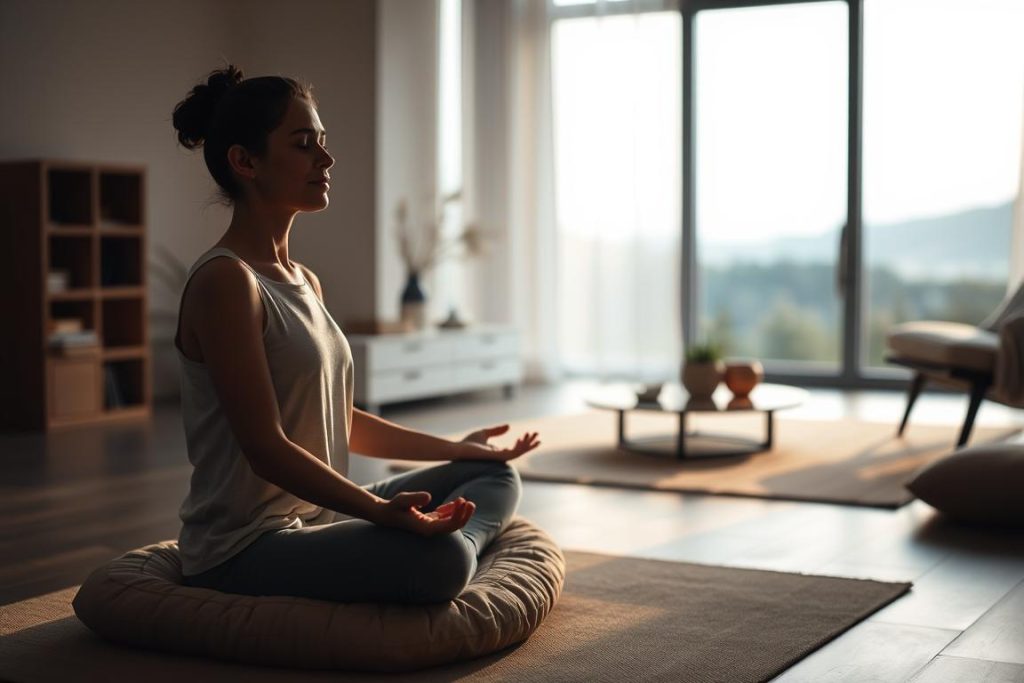
Exploring mindfulness meditation reveals its core principles and simple exercises to begin. It’s about being present in the moment, observing thoughts and feelings without judgment. Jon Kabat-Zinn says it’s about focusing on the present without judgment.
Core Principles of Mindfulness
The core of mindfulness is paying attention to the present moment without judgment. It means noticing your thoughts, feelings, and body sensations as they happen. You don’t try to change them or react.
Accepting things as they are is a key part of mindfulness. This helps reduce stress and anxiety by not fighting your current experience.
Simple Mindfulness Exercises
Starting with mindfulness meditation is easy with simple exercises. One way is to focus on your breath, feeling the air move in and out of your nostrils. If your mind drifts, gently bring it back to your breath.
Another exercise is the body scan. Lie down or sit comfortably and focus on each part of your body, starting at your toes and moving up. Notice any sensations or feelings without trying to change them.
- Focus on your breath
- Practice non-judgmental acceptance
- Try a body scan
Guided Meditation: A Beginner’s Best Friend
Guided meditation is a great way for beginners to start meditating. It’s natural to feel unsure about starting a meditation practice. Guided meditation lets you listen to a guide who leads you through a practice, making it easy to begin.
Finding Useful Guided Resources
Finding the right resources for guided meditation is the first step. You can find them on apps, websites, and YouTube. The Mayo Clinic says guided meditation is a good way to start.
Apps like Headspace and Calm offer many sessions for different needs. Look for resources that feel right to you. You might like a certain voice or type of meditation. Try different guides and styles to find what suits you best.
Tips for Effective Listening
To get the most from guided meditation, listen well. Here are some tips:
- Focus on the guide’s voice: Let the guide’s words guide your attention. Gently bring your focus back when your mind drifts.
- Be patient with yourself: It’s okay if your mind wanders, even when starting. Don’t judge yourself. Just acknowledge the distraction and return to the guide.
- Use headphones: Headphones help you focus by blocking out distractions. They let you fully immerse in the meditation.
By following these tips and finding good resources, you can enjoy guided meditation’s benefits.
Loving-Kindness Meditation for Emotional Well-being
Loving-kindness meditation helps you feel love, compassion, and kindness. It’s good for your emotional health. It makes you feel less anxious and stressed.
Steps for Practicing Loving-Kindness
Start by finding a quiet, comfy spot to sit. Say kind things to yourself, like “May I be happy, may I be healthy, may I be at peace.” Then, think about friends and family, and even those you might not get along with.
- Find a quiet and comfortable space to meditate.
- Start by directing kindness towards yourself.
- Gradually expand your circle of kindness to others.
How It Reduces Anxiety and Stress
This meditation makes you feel more compassionate. It helps you think positively. It moves your mind away from bad thoughts.
Benefits of Loving-Kindness Meditation:
| Benefit | Description |
|---|---|
| Reduces Anxiety and Stress | Cultivates compassion and understanding, shifting focus from negative thoughts. |
| Improves Emotional Well-being | Enhances feelings of love, kindness, and compassion towards oneself and others. |
| Increases Positive Emotions | Fosters a positive mindset by focusing on happiness, health, and peace. |
Try loving-kindness meditation every day. You’ll feel better emotionally and mentally.
Transcendental Meditation Explained
Transcendental meditation is about silently repeating a mantra. It helps the mind reach a deeper state of consciousness. This simple yet powerful technique is great for anyone wanting to reduce stress and boost mental health.
Overview of the Technique
It’s based on the idea that our minds naturally seek happiness. By using a mantra, people can find deep relaxation and inner peace. You practice for 20 minutes, twice a day, with your eyes closed and sitting comfortably.
The mantra is a key part of transcendental meditation. It’s a word or sound repeated silently to calm the mind. You get your mantra from a certified teacher during a personal session.
Benefits and How to Learn It
Transcendental meditation offers many benefits. It can lower stress and anxiety, improve mental clarity, and boost overall well-being. Studies show it can also lower blood pressure, enhance cognitive function, and strengthen the immune system.
Key Benefits:
- Reduces stress and anxiety
- Improves mental clarity and focus
- Enhances overall well-being
- Promotes better sleep
- Increases self-awareness
To start transcendental meditation, you need personal instruction from a certified teacher. This includes sessions where the teacher teaches you how to use your mantra and supports you during the first practice period.
Adding transcendental meditation to your daily routine can bring these benefits into your life. It can make your life more balanced and fulfilling.
Breathwork: A Key Component of Meditation
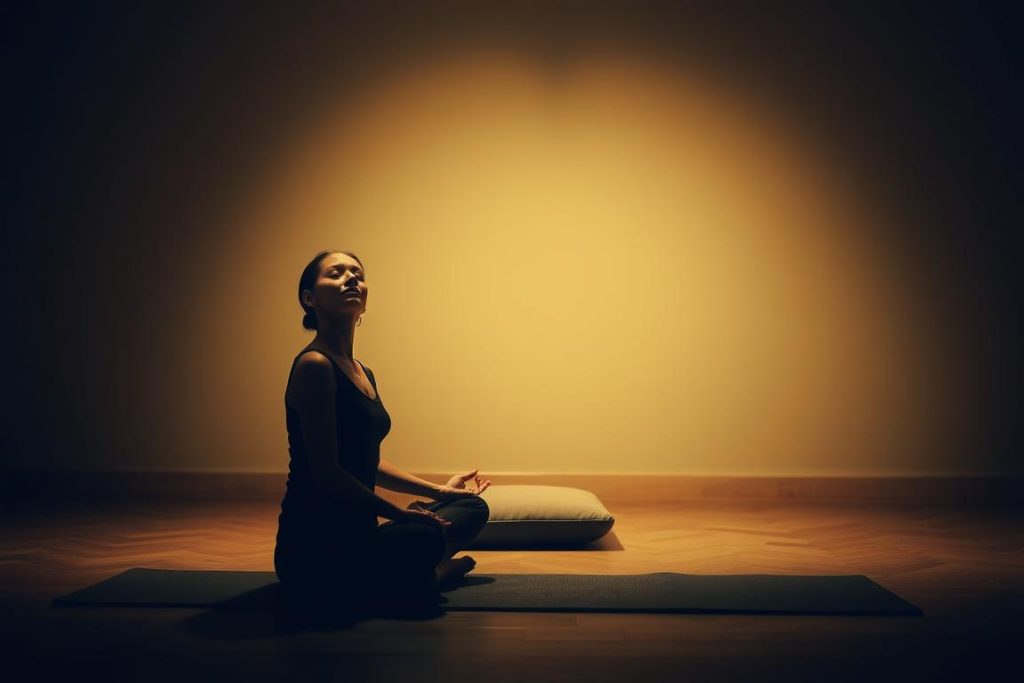
Starting your meditation journey? You’ll find that breathwork is key to quieting your mind and lowering stress. It’s about controlling your breathing to relax and focus better.
Techniques for Effective Breath Control
Want to add breathwork to your meditation? Try these simple methods:
- Diaphragmatic breathing: Expand your belly, not your chest.
- 4-7-8 breathing: Breathe in for 4, hold for 7, then exhale for 8.
- Box breathing: Inhale, hold, exhale, and hold again, all for 4 counts.
These breathing exercises calm your mind and control your breathing.
Benefits of Breath Awareness
Practicing breathwork brings many benefits, like:
| Benefit | Description |
|---|---|
| Reduced Stress | Conscious breathing calms your nervous system. |
| Improved Focus | Breath awareness boosts mental clarity. |
| Better Emotional Regulation | Breathwork helps manage your emotions. |
Adding breathwork to your meditation can improve your well-being. It leads to a more peaceful mind.
Incorporating Movement into Meditation
Movement and meditation are not just separate practices. When combined, they can be a powerful tool for reducing stress and anxiety. You’ll see how adding physical movement to your meditation can boost your well-being.
Yoga and walking meditation are great ways to mix movement with meditation. These practices help lower stress and improve your physical health. They also boost flexibility and balance.
Yoga as a Meditative Practice
Yoga is more than exercise; it’s a meditative practice. It combines breathwork, movement, and mindfulness. This helps you focus and find calm.
To start yoga, find a quiet spot. Begin with simple poses and add more complex ones as you get better.
Yoga can reduce anxiety and improve flexibility. It also helps with concentration and emotional control. Regular practice increases self-awareness.
Walking Meditation Basics
Walking meditation mixes movement with mindfulness. It involves paying attention to your walk. Notice your feet touching the ground and your breath.
To try walking meditation, walk in a quiet place. Focus on your walk and your surroundings.
Walking meditation is good for those who can’t sit for long. It helps you stay present and focused all day.
Adding movement to meditation offers a holistic way to reduce stress and anxiety. Yoga or walking meditation can help you feel more connected to your body and mind.
Overcoming Common Challenges in Meditation
The journey to a regular meditation practice comes with its own set of hurdles. But knowing these obstacles is the first step to beating them. As you keep meditating, you’ll face many challenges. Yet, with the right strategies, you can overcome them all.
Dealing with Distractions
One big challenge meditators face is distractions. Sounds from outside, family talk, or phone alerts can mess up your meditation. To beat this, make a good space for meditation by:
- Finding a quiet, comfy spot for meditation without interruptions.
- Using noise-cancelling headphones or apps for white noise to block out sounds.
- Putting your phone on “do not disturb” mode during meditation.
Also, when your mind wanders (and it will!), just notice the thought and bring your focus back to your breath or meditation object. The goal is to ignore the distraction and let it go.
Maintaining Consistency
Keeping up with meditation can be tough, mainly when life gets hectic. But sticking to it is vital for meditation’s benefits. To keep going:
- Begin with a small daily goal, even if it’s just a few minutes.
- Make meditation a habit by doing it at the same time every day.
- Be kind to yourself; it’s okay if motivation changes.
By using these tips, you’ll be ready for any meditation challenges that come your way. This will help you keep a consistent and fulfilling practice.
Meditation Tools and Resources
Starting your meditation journey? The right tools and resources can really help. Today, there are many options to fit your style and preferences.
Apps for Guided Meditation
Guided meditation apps have changed how we meditate. They make it easier and more convenient. Here are some top apps:
- Headspace: Offers personalized meditation sessions and is easy to use.
- Calm: Provides guided meditations, sleep stories, and relaxing music.
- Insight Timer: Has a huge library of free guided meditations and tracks your progress.
These apps are perfect for beginners. They offer structured guidance to help you meditate regularly.
Recommended Books on Meditation
Books are great for those who like a traditional approach or want to learn more about meditation. Here are some top picks:
- “The Miracle of Mindfulness” by Thich Nhat Hanh: A classic on mindfulness practices.
- “Wherever You Go, There You Are” by Jon Kabat-Zinn: Discusses mindfulness in everyday life.
- “10% Happier” by Dan Harris: Shares how meditation can change your life.
These books offer deep insights and practical tips. They can improve your meditation and overall well-being.
Using these meditation tools and resources can boost your practice. They help you stay motivated and enjoy meditation’s many benefits.
The Long-Term Impact of Regular Meditation Practice
Starting a meditation routine can make you curious about long-term effects. Research proves that regular meditation boosts both physical and mental health.
Brain Changes Through Meditation
Meditation can change your brain, lowering stress and anxiety. It rewires your brain for calm and clarity. This leads to better mental health and resilience.
Real-Life Success Stories
Many people have seen big benefits from meditation. They’ve felt less anxiety and depression and slept better. By sticking to meditation, you can see these changes too and change your life.
FAQ
What is meditation, and how can it help reduce stress and anxiety?
Meditation is a way to calm your mind and body. The Mayo Clinic says even a few minutes can help lower stress and anxiety.
What are the different types of meditation techniques?
There are many meditation types, like mindfulness, guided, loving-kindness, and transcendental meditation. Each has its own benefits and ways to practice.
How do I get started with meditation?
Start by finding a quiet spot and picking the best time to meditate. Use apps or books for guided meditation to help you begin.
What is mindfulness meditation, and how do I practice it?
Mindfulness meditation is about being in the moment. Focus on your breath or try body scan meditation to practice it.
What is guided meditation, and how can I use it?
Guided meditation lets you follow a guide’s voice. You can find it online or through apps like Headspace or Calm.
What is loving-kindness meditation, and how can it help reduce anxiety and stress?
Loving-kindness meditation teaches kindness and compassion. It can make you feel calmer and more at peace.
What is transcendental meditation, and how do I learn it?
Transcendental meditation uses a mantra to quiet your mind. Learn it from a certified teacher or online resources.
How can breathwork help in meditation?
Breathwork is key in meditation. It helps you relax and focus. Try diaphragmatic breathing or box breathing for relaxation.
Can I incorporate movement into my meditation practice?
Yes, you can. Yoga or walking meditation add mindfulness and relaxation while moving.
What are some common challenges in meditation, and how can I overcome them?
Challenges include distractions and staying consistent. Find a quiet space, set a regular time, and use guided resources to overcome them.
What are some recommended tools and resources for meditation?
Good tools include apps like Headspace or Calm, meditation books, and online resources.
What are the long-term benefits of regular meditation practice?
Regular meditation lowers stress and anxiety, improves emotional control, and boosts calmness. It also changes your brain, increasing gray matter and cognitive function.
