


Did you know honoring your ancestors can heal deep wounds? It can also help you find your true identity. Many cultures worldwide have been doing ancestral rituals for centuries to connect with their heritage.
By honoring our ancestors, we can start to reconnect with our roots. This can bring us inner peace. Studies show it’s good for our mental and emotional health.
Key Takeaways
- Honoring ancestors can help heal generational wounds.
- Ancestral rituals can foster a deeper sense of identity.
- Reconnecting with roots can lead to inner harmony.
- This practice has a positive impact on mental and emotional well-being.
- Many cultures have been practicing ancestral rituals for centuries.
What is Ancestral Healing?
Ancestral healing connects us with our ancestors to heal emotional, spiritual, and physical wounds. It’s believed to offer guidance, wisdom, and healing energy. This helps individuals overcome past traumas or current challenges.
Definition of Ancestral Healing
Ancestral healing is a holistic practice that honors our ancestors’ influence on our lives. It’s based on the belief that our ancestors continue to support us. This support is sought through rituals, ceremonies, and personal practices.
Historical Context
Ancestral healing has a rich history across cultures worldwide. Indigenous cultures have long honored their ancestors through rituals and ceremonies. African and Asian cultures also have unique traditions centered around ancestral reverence.
Understanding ancestral healing’s history shows its importance and role in shaping lives. By looking at different cultures’ practices, we gain insight into its universal principles.
Importance in Various Cultures
Ancestral healing is vital in many cultures, linking the past to the present. In indigenous cultures, it’s key to spiritual practices, connecting with heritage and nature. In other cultures, it’s a way to honor lineage and seek guidance from the past.
Its importance across cultures highlights its universal value. Exploring these practices deepens our understanding of ancestral healing and its benefits for personal growth.
Benefits of Ancestral Healing Rituals
Ancestral healing rituals help tackle generational trauma, lower stress, and deepen spiritual ties. They offer many benefits that boost overall well-being.
Emotional Healing
One key benefit is emotional healing. These rituals help face and solve emotional problems passed down through generations. They allow individuals to overcome negative patterns and emotional pain.
A study showed that these rituals greatly reduced anxiety and depression. This is because they connect people with their ancestors, revealing the sources of emotional pain.
Physical Well-being
These rituals also improve physical well-being. Chronic stress and emotional issues can harm physical health. By easing stress and healing emotions, these rituals enhance physical health.
A table below shows how ancestral healing rituals benefit physical health:
| Physical Health Benefits | Description |
|---|---|
| Reduced Stress | Lower cortisol levels and decreased anxiety |
| Improved Sleep | Better sleep quality and duration |
| Enhanced Immune Function | Stronger immune system due to reduced stress |
Spiritual Connection
Ancestral healing rituals also deepen spiritual connection. They help individuals feel a sense of belonging and purpose. This connection brings comfort, guidance, and a link to their lineage.
Many find peace and a strong connection to their heritage through these rituals. This bond is a powerful source of strength and inspiration.
Common Ancestral Healing Practices
Ancestral healing is more than just a concept. It’s a real experience that uses meditation, ceremonial rites, and storytelling. These methods help us connect with our ancestors and find balance in life.
Meditation and Mindfulness
Meditation and mindfulness are key in ancestral healing. They create a quiet space to listen to our ancestors. By focusing on now, we can let go of distractions and connect with their wisdom.
To start meditating, find a quiet, comfy spot. Use guided meditations or just breathe, inviting your ancestors to join you.
Tips for Effective Meditation:
- Begin with short sessions and grow them over time.
- Use a mantra or intention to focus.
- Be patient; meditation takes time to master.
Ceremonial Rites
Ceremonial rites are essential in ancestral healing. You can make them simple or elaborate, based on your culture and preference. The goal is to honor your ancestors and acknowledge their role in your life.
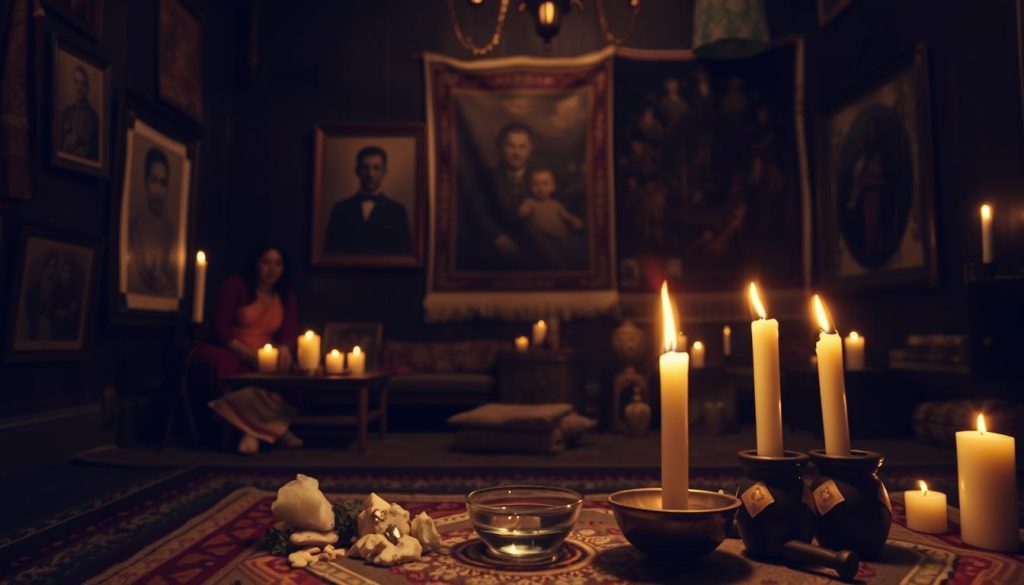
A ceremony might include setting up an altar with photos, heirlooms, or special foods. Then, light candles or say prayers to call upon their guidance.
“Rituals are a way of making the invisible visible, of making the unseen seen.” – Unknown
Storytelling Traditions
Storytelling connects us to our ancestors and shares their wisdom. By telling stories of their lives, we keep their memory alive and learn from them.
To use storytelling, gather family stories or research your history. Share these through writing, oral tales, or creating a family tree.
Benefits of Storytelling:
- Preserves family history and cultural heritage.
- Creates a sense of connection to ancestors.
- Offers valuable life lessons and insights.
Preparing for Ancestral Healing Rituals
Preparing for ancestral healing rituals is a personal journey. It’s about connecting with your ancestors and setting the stage for healing and guidance.
Setting Intentions
Setting clear intentions is the first step. It means defining what you hope to achieve or resolve. Reflect on why you want to honor your ancestors and what you hope to gain.
Malidoma Somé, a renowned spiritual teacher, once said,
“The ancestors are not just people who are dead; they are people who are alive in the spirit.”
This quote shows the importance of understanding and respecting our ancestors.
To set your intentions, write down your thoughts, feelings, and desires. Be honest and open. This can help clarify your intentions and prepare your mind and heart for the ritual.
Creating a Sacred Space
Creating a sacred space is key for an effective ritual. It should be quiet, comfortable, and free from distractions. This allows you to focus on your intentions and connect with your ancestors.
Tips for Creating a Sacred Space:
- Choose a quiet, dedicated area for your ritual.
- Use meaningful objects to create an altar.
- Consider lighting candles or incense to create a peaceful atmosphere.
- Ensure the space feels safe and comfortable for you to connect with your ancestors.
By carefully preparing for your ancestral healing ritual, you create a space for healing, reflection, and connection. Remember, approach this process with reverence and an open heart.
Tools and Materials for Ancestral Healing
In ancestral healing, the items we use are more than just objects. They are keys to understanding and honoring our ancestors. It’s key to know the importance of the tools and materials we choose.
Items for Ceremonial Use
Many items are used in ceremonies for ancestral healing. Candles symbolize the light of our ancestors, guiding us. Incense purifies the space and drives out negative energies. Sacred herbs like sage and sweetgrass cleanse and protect the space.
Photos or personal items of ancestors connect us to them. Ritual drums or bells call upon the ancestors and mark ritual moments.
Natural Elements Importance
Natural elements are vital in ancestral healing, linking the physical and spiritual worlds. Stones and crystals are used for their healing properties and energy storage. Water purifies and heals, symbolizing renewal. Earth elements ground the ritual, connecting us to the land and ancestors.
Using these natural elements deepens our practice and strengthens our connection to heritage. Each element is chosen for its significance and role in the ritual.
How to Conduct an Ancestral Healing Ritual
Ancestral healing rituals help you break free from inherited patterns and grow. They connect you with your ancestors. This lets you honor them and seek their wisdom.
Step-by-Step Guide
To do an effective ancestral healing ritual, follow these steps:
- Prepare Your Space: Make a sacred area without distractions for your ritual.
- Set Your Intention: Know what you want from the ritual, like healing or guidance.
- Invoke Your Ancestors: Call your ancestors by name or their role in your life, inviting them to support you.
- Offer Gratitude and Respect: Appreciate your ancestors’ role in your life and their sacrifices.
- Seek Guidance or Healing: Ask for the healing or guidance you need on a specific issue.
- Reflect and Release: Reflect on the insights or feelings from the ritual. Release any negative patterns or emotions.
- Close the Ritual: Thank your ancestors for their presence and guidance, then close the ritual.
Personal Reflection Techniques
Reflecting on your experience is key after an ancestral healing ritual. You can use:
- Journaling: Write down your thoughts, feelings, and insights after the ritual to process your experience.
- Meditation: Keep meditating on the guidance or healing received. This helps deepen your understanding.
- Creative Expression: Use art, music, or other creative outlets to express the emotions and insights from the ritual.
By following these steps and using personal reflection techniques, you can make your ancestral healing rituals more effective. This helps you connect deeper with your heritage.
Integrating Ancestral Wisdom into Daily Life
Our ancestors have much to teach us. By adding their wisdom to our daily lives, we connect deeper and find purpose. In today’s world, their practices and values guide and strengthen us.
Daily Affirmations
Daily affirmations are a great way to bring ancestral wisdom into our lives. These positive statements honor our ancestors and their impact on us. For example, saying, “I honor the strength and resilience of my ancestors, and I embody these qualities in my own life.” helps us think positively and align with our lineage’s values.
To make affirmations a habit, pick a time each day to reflect on them. It could be during morning meditation, before bed, or any special moment for you.
Rituals for Everyday Practice
Adding simple rituals to our daily lives also connects us to our ancestors. Actions like saying grace before meals, lighting a candle for our ancestors, or taking a moment of silence honor their presence. These rituals keep our ancestors’ memory alive in our daily lives.
For example, starting a daily practice of saying grace before meals honors our ancestors. You might say, “We give thanks for the nourishment we receive, and we honor the ancestors who have cultivated the land and provided for us.” Such practices enrich our lives and keep our heritage alive.
By making these practices part of our daily routines, we deepen our connection to our heritage and the world around us. This leads to a more fulfilling and spiritually rich life, guided by our ancestors’ wisdom.
The Role of Ancestors in Healing
Understanding our ancestors’ role in our lives is key to healing. We often face challenges our ancestors have overcome. This connection can guide us.
Our ancestors offer guidance and wisdom in tough times. Their experiences teach us valuable lessons for our healing journeys.
Understanding Ancestral Guidance
Ancestral guidance taps into the wisdom of generations. It’s about learning from our ancestors’ struggles and victories. This knowledge helps us on our paths.
Honoring our ancestors helps us clear emotional and spiritual blockages. Practices like meditation, prayer, or reflection connect us to their wisdom.
| Methods of Seeking Ancestral Guidance | Description | Benefits |
|---|---|---|
| Meditation | A practice of quieting the mind to connect with ancestral wisdom. | Reduces stress, increases clarity. |
| Prayer | A form of communication with ancestors, seeking their guidance and support. | Provides comfort, fosters a sense of connection. |
| Reflection | Taking time to think about the experiences and wisdom of ancestors. | Enhances understanding, promotes personal growth. |
Learning from Ancestral Mistakes
Our ancestors’ mistakes teach us valuable lessons. By understanding their challenges and triumphs, we can avoid their mistakes. This helps us grow.
Learning from their mistakes means acknowledging and releasing patterns of trauma or negativity. This clears family trauma spiritually. It promotes healing in ourselves and our families.

By embracing our ancestors’ wisdom, we gain a deeper understanding of ourselves. This understanding is a powerful catalyst for healing and growth.
Challenges in Ancestral Healing
Ancestral healing has many benefits but also faces challenges. It’s important to know the common hurdles people may encounter.
Common Misconceptions
One big challenge is overcoming misconceptions. Many think ancestral healing is only for the spiritual or religious. They forget its cultural and historical depth.
Some common misconceptions include:
- The belief that ancestral healing is only for certain cultures or communities.
- The assumption that it requires a specific religious or spiritual affiliation.
- The notion that ancestral healing is a one-time practice, not an ongoing process.
By understanding and addressing these misconceptions, people can start ancestral healing with a clearer mind.
Emotional Blockages
Emotional blockages are a big challenge too. They come from unresolved trauma, unexpressed feelings, or unseen family patterns.
| Types of Emotional Blockages | Description | Impact on Ancestral Healing |
|---|---|---|
| Unresolved Trauma | Past experiences that have not been fully processed or healed. | Can hinder the ability to connect with ancestral energies. |
| Unexpressed Emotions | Emotions that have not been acknowledged or expressed. | Can create resistance to the healing process. |
| Unacknowledged Family Patterns | Patterns or behaviors passed down through generations that are not recognized. | Can perpetuate cycles of negative behavior. |
It’s key to recognize and tackle these emotional blockages for effective healing. Meditation, journaling, and getting help from experts can help overcome these hurdles.
By facing and working through these challenges, people can deepen their ancestral healing. This leads to a stronger connection with their ancestors.
Finding Community Support
Starting your ancestral healing journey can be easier with a supportive community. Sharing your journey with others can make it more meaningful. It also offers valuable insights and support.
Local and Online Resources
Look for local resources like metaphysical stores, community centers, and spiritual organizations. They often have events or groups for ancestral healing. Online, join Facebook groups, forums, and social media communities focused on ancestral healing.
Some online resources to consider include:
- Websites dedicated to ancestral healing and spirituality
- Online courses that teach ancestral healing practices
- Apps that guide you through meditation and ritual practices
Workshops and Retreats
Workshops and retreats are great for learning and connecting. You can learn from experienced practitioners and meet others who share your interests. These events can be weekend retreats or week-long workshops on various aspects of ancestral wisdom.
“The power of community is a catalyst for healing,” say practitioners. These events not only teach you more but also help you form lasting connections.
By using local and online resources, and attending workshops and retreats, you can find a supportive community. This community will enrich your ancestral healing journey.
Stories of Transformation
Exploring ancestral healing, we find stories that deeply touch us. These tales are not just about personal growth. They are about reconnecting with our roots and seeing how our cultural heritage shapes our lives.
Personal Experiences
Many share their journeys of transformation through ancestral healing. For example, someone might find a new purpose and identity by honoring their ancestors. This connection can also lead to emotional healing, like a person who felt less anxious and more calm after a ritual.
These stories show how ancestral healing can change our lives. It can happen through meditation, ceremonies, or storytelling. This practice offers a way to heal and discover ourselves.
Cultural Heritage Revelations
Ancestral healing also uncovers our cultural heritage. By exploring our ancestors’ traditions, we understand our cultural identity better. This connection empowers us, linking us to a rich legacy that guides us today and tomorrow.
| Aspect | Personal Experience | Cultural Heritage |
|---|---|---|
| Healing Practice | Meditation and mindfulness | Ceremonial rites and traditions |
| Impact | Emotional healing and self-discovery | Understanding cultural identity |
| Outcome | Reduced anxiety, greater sense of calm | Empowerment through cultural connection |
These stories of transformation show the deep impact of ancestral healing. By embracing our heritage and honoring our ancestors, we can experience deep healing and growth.
Continuing Your Ancestral Journey
As you learn more about ancestral healing, it’s key to keep your connection strong. This journey is ongoing, filled with growth, reflection, and discovery.
Practicing Consistency
Keeping up with practices is important to keep the balance and harmony from ancestral healing. Regular meditation, ceremonies, and sharing stories can keep you tied to your ancestors. Adding these to your daily life helps you keep benefiting from ancestral healing.
Exploring Further Resources
Look for workshops, online courses, and groups focused on ancestral healing. Talking with others and learning from experts can offer new insights and support. Reading books and watching documentaries about ancestral healing can also enrich your understanding.
By keeping up with your ancestral journey, you honor your heritage and help future generations. Stay dedicated to this path, embracing the wisdom and love of your ancestors as you journey on.
FAQ
What is ancestral healing, and how does it work?
Ancestral healing is a way to honor and heal your ancestors. It helps release inherited patterns and trauma. This practice promotes emotional, physical, and spiritual well-being.
It involves acknowledging your ancestors’ role in your life. You use rituals and practices to clear family trauma spiritually. This connects you with their guidance.
How do I start an ancestral healing practice?
Start by setting intentions and creating a sacred space. Learn about your ancestral heritage. Incorporate meditation, ceremonial rites, and storytelling into your daily life.
This connects you with your ancestors and honors their memory.
What are some common tools and materials used in ancestral healing rituals?
Tools include candles, incense, and sacred herbs for ceremonial use. Natural elements like stones, plants, and water are also used. These items help create a sacred space and connect with nature.
How can I integrate ancestral wisdom into my daily life?
Use daily affirmations and practice simple rituals. Honor your ancestors through various practices. This keeps you connected to your heritage and promotes healing and growth.
What are some common challenges in ancestral healing, and how can I overcome them?
Challenges include emotional blockages and misconceptions about the practice. Difficulty connecting with your ancestors is also common. Seek guidance from experienced practitioners and work with a community or support group.
Be patient with yourself as you navigate the healing process.
How can I find community support for my ancestral healing journey?
Look for local and online resources. Attend workshops and retreats. Connect with others who share your interest in ancestral healing.
This support helps you stay motivated and inspired on your healing path.
What role do ancestors play in the healing process?
Ancestors offer guidance, wisdom, and support. Honoring and connecting with them taps into their experiences and lessons. This promotes deeper healing and understanding.
Can ancestral healing help with releasing inherited patterns?
Yes, it can help release inherited patterns by acknowledging and clearing trauma and negative patterns. This promotes emotional, physical, and spiritual healing and well-being.
How can I honor my ancestors and keep their memory alive?
Practice rituals and ceremonies, share stories and traditions, and incorporate ancestral wisdom into your daily life. This keeps you connected to your heritage and promotes ongoing healing and growth.
